
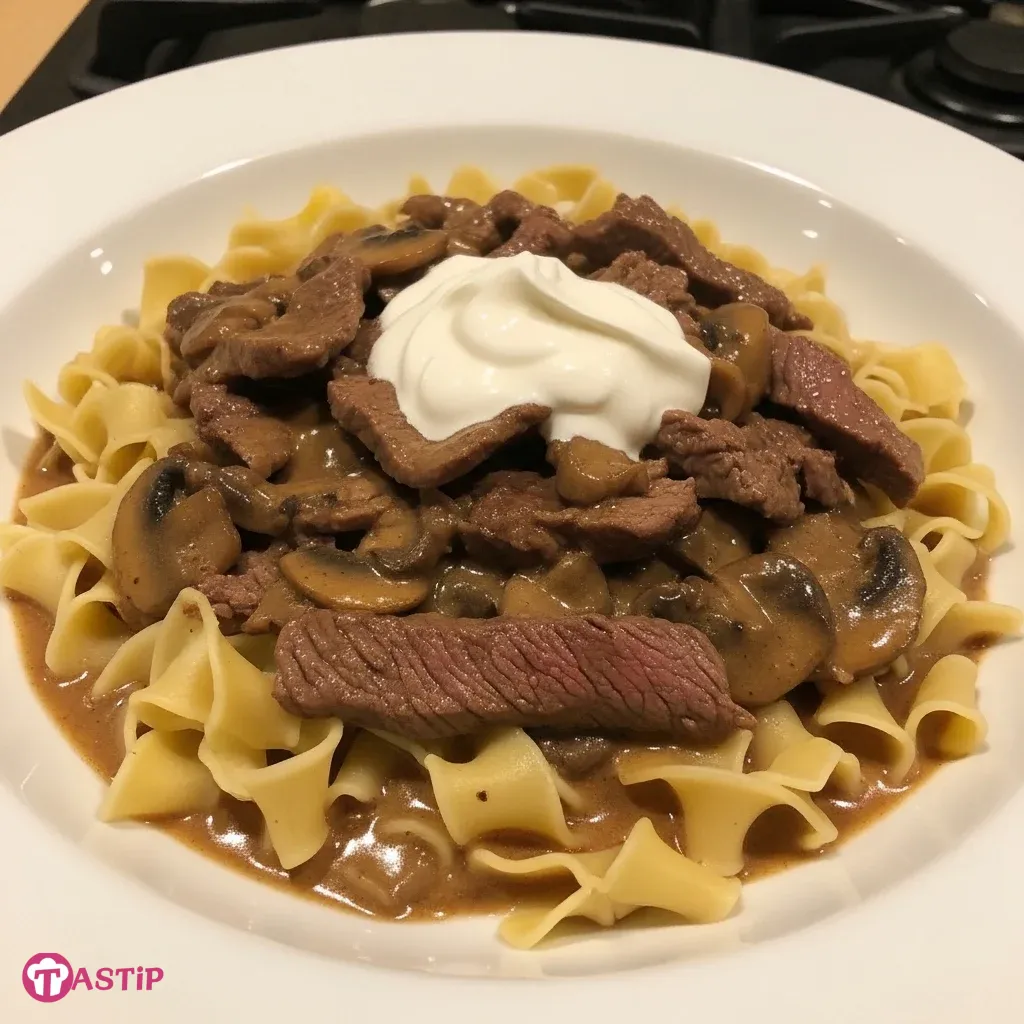
Beef Stroganoff represents the ultimate intersection of comfort and culinary science. This dish combines tender ribbons of seared beef with an earthy, umami-rich mushroom gravy, all balanced by the signature tang of sour cream. When you prepare it correctly, the sauce achieves a velvety emulsion that clings perfectly to every noodle.
Many home cooks struggle with tough meat or broken sauces, but understanding the physics of heat and dairy will change your results forever. Today, we will explore the precise techniques required to master this classic Beef Stroganoff. You will learn how to manipulate protein structures and maximize flavor development through the Maillard reaction. Let’s head to the kitchen and apply some food science to this iconic meal.
Why You’ll Love This Recipe
- Unmatched Umami Depth: We utilize a combination of seared beef and browned mushrooms to create a complex flavor profile that satisfies the deepest cravings.
- Scientific Precision: This recipe uses specific temperature control methods to ensure your Beef Stroganoff remains creamy without curdling.
- Time-Efficient Luxury: Despite its gourmet reputation, you can execute this high-quality Beef Stroganoff in under 45 minutes.
- Nutrient Dense: By incorporating high-quality proteins and fresh fungi, you receive a significant boost of B vitamins and essential minerals.
Ingredients You’ll Need
Success in the kitchen starts with understanding your raw materials. For a superior Beef Stroganoff, you must select ingredients that can withstand high heat during the searing phase and remain stable during the simmering phase. I recommend choosing a cut of beef with moderate marbling to ensure tenderness.
| Ingredient | Quantity | Chef’s Note |
|---|---|---|
| Beef Tenderloin or Sirloin | 1.5 lbs | Slice against the grain for maximum tenderness. |
| Cremini Mushrooms | 1 lb | These offer more depth than white button mushrooms. |
| Yellow Onion | 1 large | Finely diced to provide a foundational sweetness. |
| Garlic Cloves | 4 cloves | Freshly minced to preserve volatile aromatic oils. |
| Beef Bone Broth | 2 cups | Rich in gelatin for better sauce viscosity. |
| Full-Fat Sour Cream | 1 cup | Fat acts as a stabilizer against heat-induced curdling. |
| Dijon Mustard | 1 tbsp | Adds acidity and acts as a secondary emulsifier. |
| All-Purpose Flour | 2 tbsp | Required for creating a stable roux. |
| Unsalted Butter | 3 tbsp | High-quality fat for sautéing aromatics. |
| Fresh Thyme | 1 tsp | Adds an earthy, herbaceous top note. |
Substitutions & Variations
If you are looking to lighten up your Beef Stroganoff without sacrificing the essential flavor profile, consider these science-backed swaps. To reduce saturated fat, you can replace the sour cream with plain Greek yogurt. However, you must be careful; Greek yogurt has less fat and more protein, making it highly susceptible to “breaking” at high temperatures.
Always add it off the heat at the very end. For those avoiding red meat, sliced Portobello mushrooms can serve as the primary protein. These mushrooms contain high levels of glutamate, providing that “meaty” sensation known as umami.
For a gluten-free version, substitute the flour with a cornstarch slurry (equal parts cornstarch and cold water). This will provide a glossy finish to your Beef Stroganoff while keeping the dish accessible for those with sensitivities.
Experimenting with ingredient swaps can lead to delightful variations of your favorite Beef Stroganoff. For instance, consider exploring this One Pot Marry Me Ground Beef Pasta recipe for a lighter yet satisfying alternative.
Step-by-Step Instructions
- Prepare the Protein: Slice your beef into thin strips, approximately 2 inches long. Pat them dry with paper towels. Removing surface moisture is critical because water absorbs kinetic energy, preventing the beef from reaching the 285°F required for the Maillard reaction. Season generously with salt and pepper.
- The High-Heat Sear: Heat a large stainless steel or cast iron skillet over medium-high heat with a tablespoon of high-smoke-point oil. Sear the beef in batches. Do not crowd the pan; crowding lowers the temperature and causes the meat to steam in its own juices rather than brown. Remove the beef while the center is still slightly rare.
- Mushroom Dehydration and Browning: In the same pan, add the mushrooms. Do not add oil immediately. Let the mushrooms release their cellular water first. Once the water evaporates, add a tablespoon of butter. This allows the mushrooms to brown deeply, concentrating their flavor.
- Aromatic Base: Add the diced onions to the mushrooms. Sauté until translucent. Add the minced garlic and thyme, cooking for only 60 seconds. Garlic contains sulfur compounds that turn bitter if overcooked, so timing is vital for a balanced Beef Stroganoff.
- The Roux and Deglazing: Sprinkle the flour over the vegetables and stir for two minutes. This cooks out the “raw” flour taste. Slowly pour in the beef broth while whisking. This process uses starch gelatinization to thicken the liquid into a cohesive sauce. Use a wooden spoon to scrape the fond (the brown bits) off the bottom of the pan; these bits are concentrated flavor gold.
- Temper and Emulsify: Reduce the heat to low. In a small bowl, whisk a ladle of the hot sauce into the sour cream. This “tempering” step raises the temperature of the dairy gradually, preventing the proteins from denaturing and clumping. Stir the tempered cream and Dijon mustard back into the skillet.
- Final Integration: Add the seared beef and any accumulated juices back into the pan. Simmer for just 2 minutes to warm the meat through. Overcooking at this stage will cause the muscle fibers to tighten and become rubbery. Your Beef Stroganoff is now ready for service.
Pro Tips for Success
To truly master Beef Stroganoff, you must respect the chemistry of the ingredients. First, always use room temperature dairy. Cold sour cream hitting a hot liquid creates a thermal shock that almost guarantees curdling.
Second, consider the “fond.” That crust on the bottom of your pan after searing the meat contains caramelized proteins and sugars. Deglazing with a splash of dry white wine or cognac before adding the broth can add a layer of acidity that cuts through the richness of the Beef Stroganoff gravy. Lastly, choose your noodles wisely.
Wide egg noodles are traditional because their broad surface area and slightly porous texture are designed to hold onto heavy emulsions. If you prefer rice, choose a long-grain variety to maintain structural integrity under the weight of the sauce.
Understanding the science behind your cooking process can elevate your Beef Stroganoff. For additional insights, check out this One-Pan Beef and Rice Skillet that emphasizes cooking techniques that enhance flavor.
Storage & Reheating Tips
Storing Beef Stroganoff requires care to maintain the sauce’s texture. Place leftovers in an airtight container and refrigerate for up to three days. Note that the starch in the sauce will continue to hydrate, meaning the sauce will thicken significantly in the fridge.
When reheating, do not use a microwave on high power. The intense, uneven heat will cause the fat to separate from the protein in the sour cream, leaving you with an oily mess. Instead, reheat the Beef Stroganoff in a saucepan over low heat.
Add a tablespoon of broth or water to loosen the sauce. Stir constantly and remove from heat the moment it is warm enough to eat. Freezing is not recommended for this dish, as the cellular structure of the sour cream breaks during the freezing and thawing process, resulting in a grainy texture.
What to Serve With This Recipe
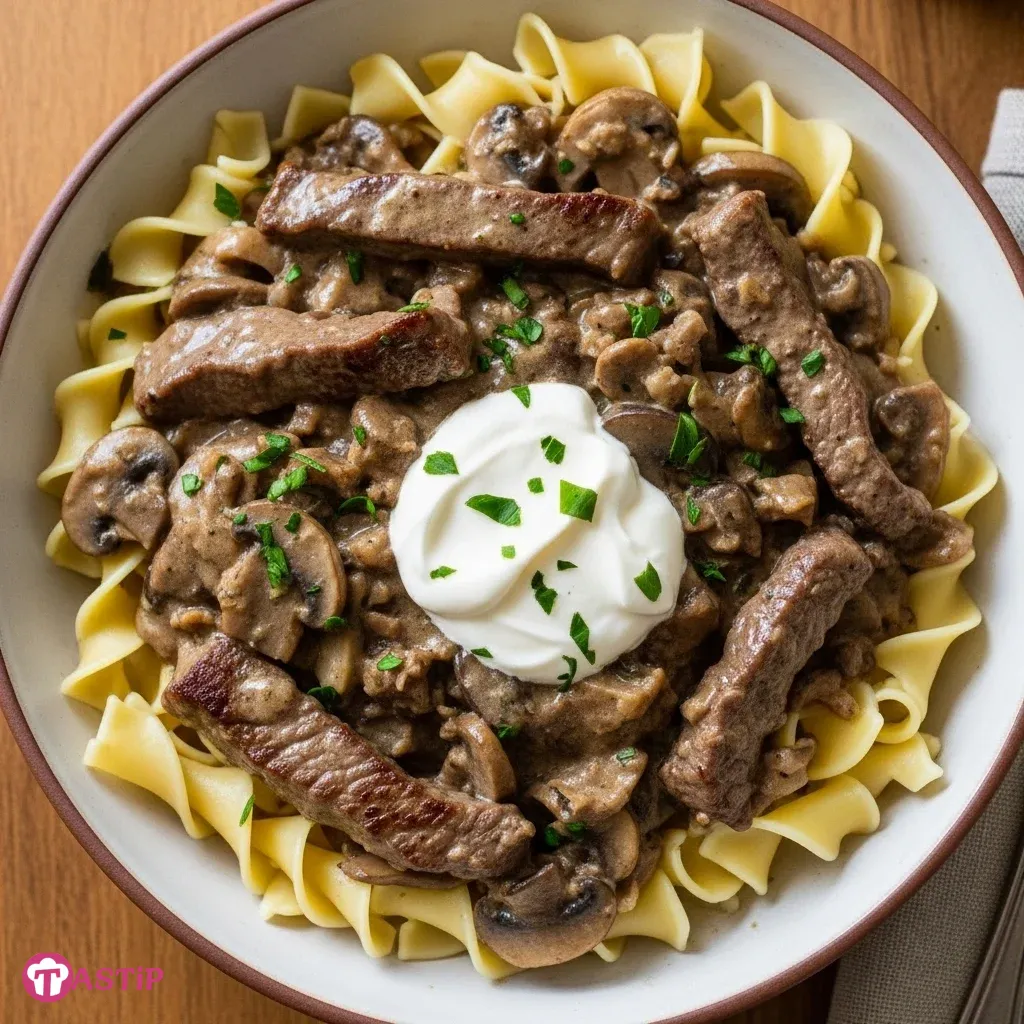
Because Beef Stroganoff is a heavy, protein-forward dish, you should pair it with sides that provide textural contrast and acidity. A crisp green salad with a lemon vinaigrette acts as a palate cleanser between bites of the rich sauce. Alternatively, roasted asparagus or steamed green beans provide a necessary snap and earthy bitterness that balances the lacto-fermented tang of the sour cream.
If you want to stay low-carb, serving the Beef Stroganoff over a bed of cauliflower mash or zucchini noodles is an excellent way to enjoy the flavors while increasing your fiber intake. Avoid sides that are overly creamy or buttery, as they will compete with the primary flavor profile of the main dish.
Serving sides that complement your Beef Stroganoff can make a significant difference in the overall meal experience. Consider pairing it with the delightful options found in our Smoked Beef Birria Burgers for a contrasting texture and flavor.
FAQs
What is the best cut of meat for Beef Stroganoff?
For the best results, use beef tenderloin, boneless ribeye, or top sirloin. These cuts come from muscles that do not do heavy work, meaning they have less connective tissue (collagen). Since this is a quick-cook recipe, you don’t have time to break down tough collagen, so starting with a naturally tender cut is essential for a high-quality Beef Stroganoff.
Why did my Stroganoff sauce turn out grainy?
A grainy sauce usually indicates that the sour cream curdled. This happens if the sauce boils after the dairy is added or if the dairy was added while cold. To prevent this in your next Beef Stroganoff, always use the tempering method described in the instructions and keep the heat on the lowest setting once the sour cream is integrated.
Can I make Beef Stroganoff without mushrooms?
While mushrooms provide a significant portion of the dish’s umami, you can omit them. If you do, I recommend adding a teaspoon of Worcestershire sauce or a small amount of tomato paste during the aromatic sauté phase. This helps replace the savory depth that the mushrooms would have provided to the Beef Stroganoff.
Beef Stroganoff is a classic dish that showcases the rich flavors of seared beef complemented by a creamy sauce made with sour cream and mushrooms. This delectable comfort food originates from Russia and has a fascinating history, which you can explore further in this detailed article.
Nutrition Information (per serving)
This data is based on a standard serving size of approximately 1.5 cups of the prepared Beef Stroganoff (excluding noodles).
| Metric | Amount |
|---|---|
| Calories | 410 kcal |
| Total Fat | 28g |
| Saturated Fat | 14g |
| Cholesterol | 95mg |
| Sodium | 620mg |
| Total Carbohydrates | 12g |
| Dietary Fiber | 2g |
| Protein | 32g |
Beef Stroganoff
- Total Time: 45 mins
- Yield: 4 servings 1x
- Diet: Gluten Free (with substitutions)
Description
Beef Stroganoff represents the ultimate intersection of comfort and culinary science, combining tender ribbons of seared beef with an earthy, umami-rich mushroom gravy, balanced by the tang of sour cream.
Ingredients
1.5 lbs Beef Tenderloin or Sirloi
1 lb Cremini Mushrooms
1 large Yellow Onio
4 cloves Garlic Cloves
2 cups Beef Bone Broth
1 cup Full-Fat Sour Cream
1 tbsp Dijon Mustard
2 tbsp All-Purpose Flour
3 tbsp Unsalted Butter
1 tsp Fresh Thyme
Instructions
- Slice beef into thin strips, pat dry, and season with salt and pepper
- Heat a skillet over medium-high heat with oil and sear beef in batches
- Add mushrooms to the same pan and allow to brown after water releases
- Sauté diced onions with mushrooms, then add minced garlic and thyme
- Sprinkle flour, cook briefly, then add beef broth while whisking
- Temper sour cream with hot sauce and stir into the skillet
- Add seared beef back, simmer briefly, and serve
Notes
Ensure sour cream is at room temperature to prevent curdling.
Deglaze with white wine or cognac for added flavor.
- Prep Time: 20 mins
- Cook Time: 25 mins
- Category: Dinner
- Method: Stovetop
- Cuisine: American
Nutrition
- Serving Size: 1.5 cups
- Calories: 410 kcal
- Sugar: 2g
- Sodium: 620mg
- Fat: 28g
- Saturated Fat: 14g
- Unsaturated Fat: Varies
- Trans Fat: 0g
- Carbohydrates: 12g
- Fiber: 2g
- Protein: 32g
- Cholesterol: 95mg