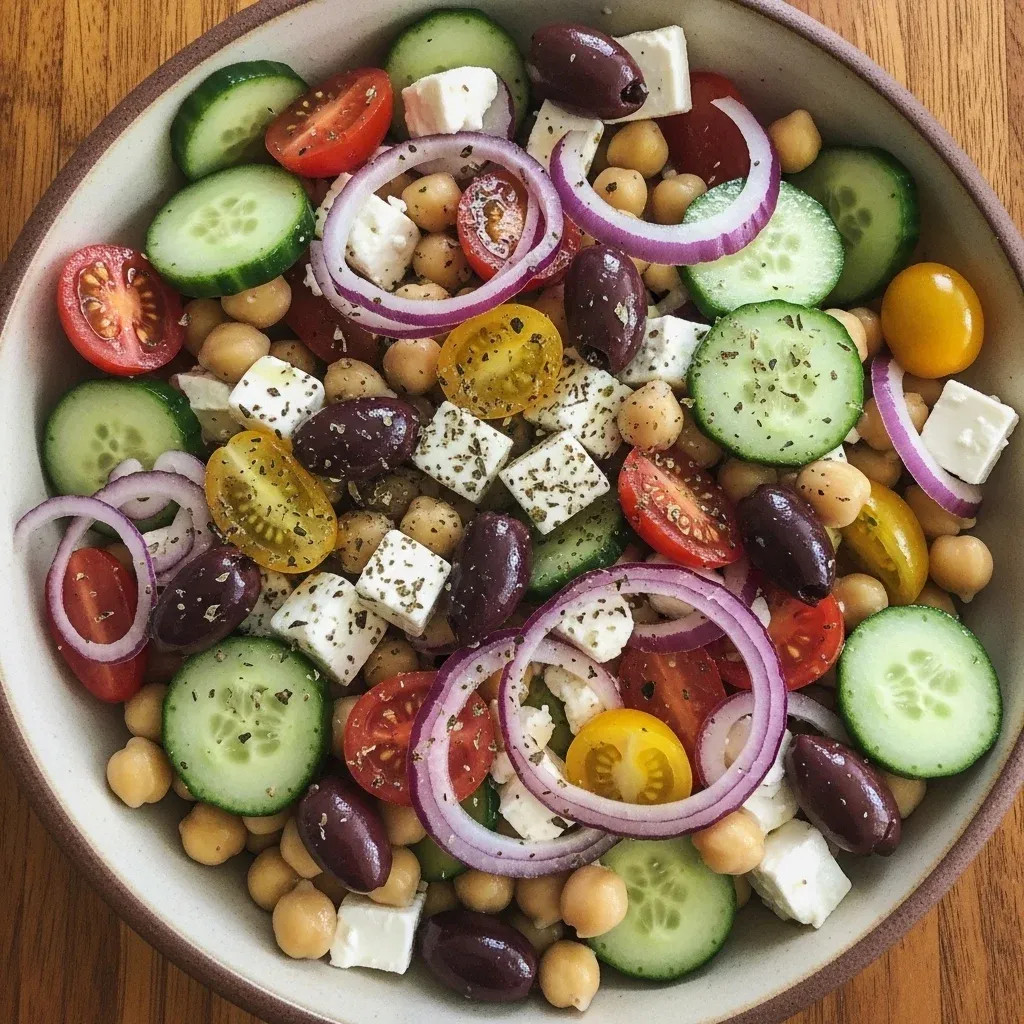
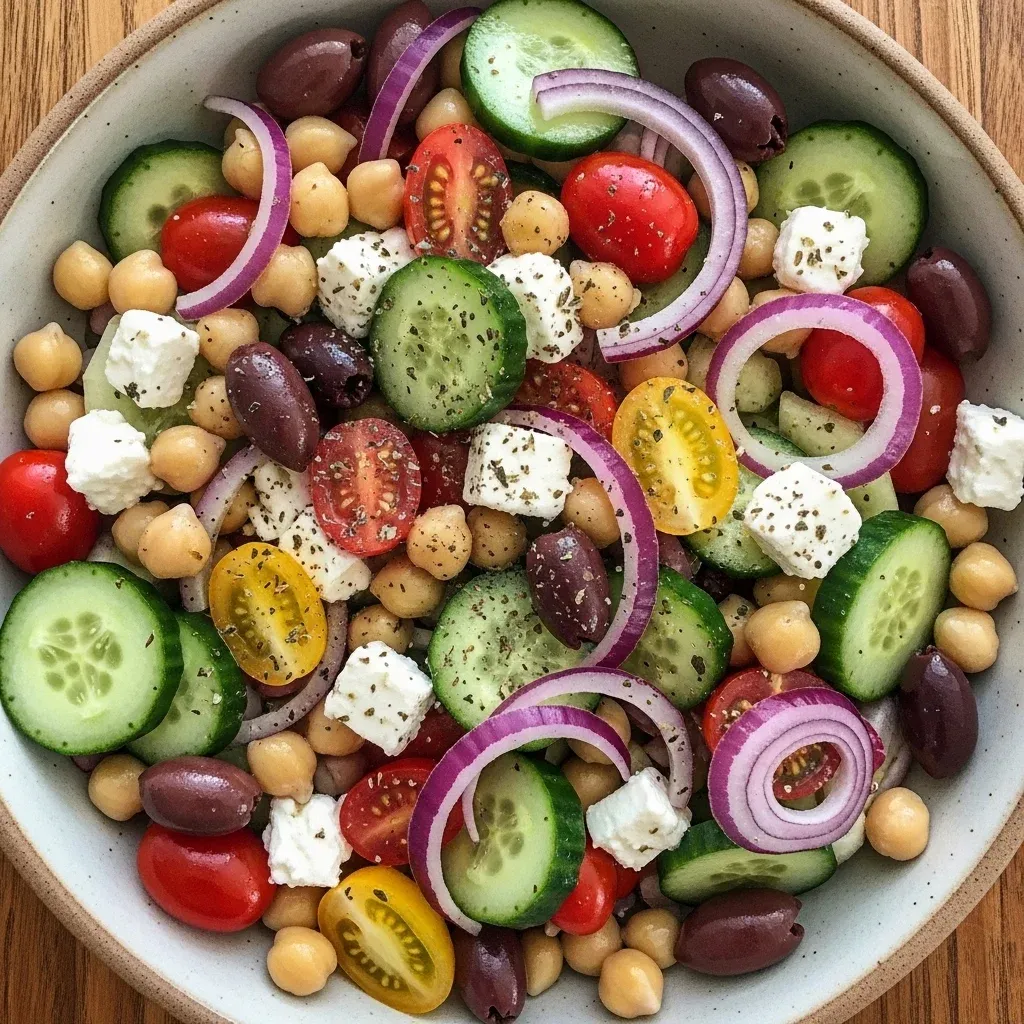
The Greek Chickpea Salad offers a masterclass in textural contrast and vibrant acidity. You will find that the creamy density of the chickpeas provides a perfect structural foundation for the crisp snap of fresh cucumbers and the juicy burst of ripe tomatoes. From a culinary science perspective, this dish succeeds because it balances the five basic tastes while providing a satisfying ratio of plant-based protein and healthy fats.
Many home cooks overlook the importance of ingredient preparation, yet the way you handle these simple components determines the success of the final dish. This recipe delivers a refreshing, nutrient-dense meal that works equally well for a quick weekday lunch or a sophisticated side dish for your next dinner party.
You will appreciate how the flavors deepen over time, making it an ideal candidate for meal prep. Prepare to elevate your vegetable game with a salad that focuses on quality, technique, and precise seasoning.
Why You’ll Love This Greek Chickpea Salad
Nutrient Density: This Greek Chickpea Salad provides high levels of fiber and plant-based protein, keeping you satiated for hours without the midday energy crash.
Complex Flavor Profile: The combination of tangy feta cheese, briny Kalamata olives, and a sharp lemon-oregano vinaigrette creates a multidimensional tasting experience.
Zero Cooking Required: You can assemble this entire dish without turning on the stove, which preserves the heat-sensitive vitamins in the fresh produce.
Exceptional Shelf Life: Unlike leafy green salads that wilt within an hour, the structural integrity of the chickpeas and hardy vegetables allows this salad to stay crisp for days.
Ingredients You’ll Need
To achieve the best results with your Greek Chickpea Salad, you must prioritize the quality of your raw materials. Each ingredient plays a specific role in the chemical and physical makeup of the dish.
Ingredient Category
Component
Purpose/Function
The Base
2 cans (15 oz each) Chickpeas (Garbanzo Beans)
Provides protein, starch, and a creamy mouthfeel.
The Crunch
1 English Cucumber
Adds hydration and a crisp, structural snap.
The Acid/Sweet
1 pint Cherry Tomatoes
Provides bright acidity and natural sugars to balance the salt.
The Pungency
1/2 small Red Onion
Offers a sharp, aromatic bite and sulfur compounds for depth.
The Brine
1/2 cup Kalamata Olives
Introduces salt and fat-soluble flavor compounds.
The Fat
1/2 cup Feta Cheese (crumbled)
Adds creaminess and tang through lactic acid.
Extra Virgin Olive Oil: Use a high-quality oil to emulsify the dressing and carry flavor.
Red Wine Vinegar & Lemon Juice: This dual-acid approach brightens the heavy starches of the beans.
Dried Oregano & Fresh Parsley: These herbs provide the signature Mediterranean aromatic profile.
Kosher Salt & Black Pepper: These essential seasonings enhance the natural flavors of every vegetable.
Substitutions & Variations
While the classic Greek Chickpea Salad is nearly perfect, you might occasionally need to swap ingredients based on dietary needs or pantry availability. I always encourage experimentation, provided you maintain the balance of the dish. If you find yourself without chickpeas, you can substitute cannellini beans or Great Northern beans.
These white beans offer a similar creamy texture, though they are slightly softer and more delicate. For those seeking a lower-sodium option, replace the feta cheese with diced avocado. The avocado provides the necessary fat and creaminess without the heavy salt content of the cheese.
Furthermore, you can boost the vegetable count by adding diced bell peppers or shaved radishes. Bell peppers introduce a sweet crunch, while radishes provide a peppery bite that complements the red onion.
If you want to make this Greek Chickpea Salad vegan-friendly, simply use a high-quality plant-based feta or omit the cheese entirely and add a tablespoon of nutritional yeast to the dressing for a similar umami profile. Always remember that any substitution should aim to replicate the original ingredient’s texture or flavor function.
While the classic Greek Chickpea Salad is nearly perfect, you might occasionally need to swap ingredients based on dietary needs or pantry availability. If you enjoy variations on this theme, check out the Greek Quinoa Salad for another delicious and nutritious option.
Step-by-Step Instructions
Success in the kitchen often boils down to the order of operations. Follow these steps to ensure your Greek Chickpea Salad achieves maximum flavor penetration and structural stability.
Prepare the Chickpeas: Drain the canned chickpeas into a colander. Rinse them thoroughly under cold running water until the foam (aquafaba) completely disappears. Shake the colander vigorously to remove excess moisture. This ensures the dressing adheres to the beans rather than sliding off.
Macerate the Onions: Finely dice the red onion. Place the diced onions in a small bowl and cover them with the red wine vinegar and lemon juice. Let them sit for 10 minutes. This technique, called maceration, softens the onion’s raw bite and colors the dressing a beautiful pink hue.
Dice the Vegetables: Cut the English cucumber into uniform quarter-inch cubes. Halve the cherry tomatoes. By keeping the vegetable sizes consistent with the size of the chickpeas, you ensure a balanced forkful in every bite. Slice the Kalamata olives into rounds.
Create the Emulsion: In a large mixing bowl, whisk together the macerated onions (and their liquid), extra virgin olive oil, dried oregano, salt, and pepper. Whisk vigorously until the oil and acid form a temporary emulsion. The fats will help transport the herb flavors throughout the Greek Chickpea Salad.
Combine and Fold: Add the chickpeas, cucumbers, tomatoes, and olives to the bowl with the dressing. Use a large spatula to fold the ingredients together gently. You want to coat every surface without bruising the delicate tomatoes.
Add the Final Touches: Gently fold in the crumbled feta cheese and chopped fresh parsley. Incorporating the feta last prevents it from breaking down too much and clouding the dressing.
The Marination Phase: Let the Greek Chickpea Salad sit at room temperature for at least 20 minutes before serving. This allows for osmotic exchange, where the salt and acid penetrate the vegetables and beans, creating a cohesive flavor profile.
Pro Tips for Success
To truly master the Greek Chickpea Salad, you need to think like a food scientist. One of the biggest challenges with vegetable-heavy salads is moisture management. Cucumbers and tomatoes contain high water content.
If you plan on serving this salad several hours later, I recommend salting the diced cucumbers separately for 10 minutes, then patting them dry. This removes excess cellular water, preventing your salad from becoming “soupy” as it sits in the refrigerator. Additionally, always use English or Persian cucumbers because their skin is thin and their seeds are negligible, providing a superior crunch without the bitterness found in standard slicing cucumbers.
Another technical secret involves the temperature of the chickpeas. If you have the time to cook dried chickpeas from scratch, toss them with the vinaigrette while they are still slightly warm. Warm starch molecules are more expanded, allowing the dressing to be absorbed into the center of the bean rather than just coating the exterior.
If you are using canned beans, ensure they are at room temperature. Cold beans have a tighter structure and won’t absorb the herbal notes of the Greek Chickpea Salad as effectively. Finally, always taste and adjust your seasoning right before serving. Cold temperatures mute flavors, so you might need an extra pinch of salt or a squeeze of lemon to wake up the palate.
To truly master the Greek Chickpea Salad, you need to think like a food scientist. For further insights on balancing textures, consider trying the Greek Pasta Salad as a complementary dish that tackles moisture management.
Storage & Reheating Tips
The Greek Chickpea Salad is a champion of longevity. Because chickpeas are structurally robust, they do not turn to mush like pasta or greens. You can store this salad in an airtight glass container in the refrigerator for up to 4 to 5 days.
In fact, many people find that the salad tastes better on day two because the flavors have had more time to meld. I recommend using glass storage containers rather than plastic, as plastic can sometimes absorb the strong aromas of the red onion and garlic over time.
When you are ready to eat the leftovers, do not reheat them. This dish is designed to be served chilled or at room temperature to preserve the crispness of the vegetables. Before serving your stored Greek Chickpea Salad, give it a thorough toss.
The dressing will naturally settle at the bottom of the container. If the salad looks a bit dry, a tiny drizzle of fresh olive oil or a quick squeeze of lemon juice will instantly restore its luster and vibrant flavor. Avoid freezing this salad; the high water content in the cucumbers and tomatoes will cause the cell walls to burst during the freezing process, resulting in a soggy mess upon thawing.
What to Serve With This Recipe
Greek Chickpea Salad 7
The versatility of the Greek Chickpea Salad makes it a fantastic partner for a wide variety of main courses. To keep the meal light and healthy, I suggest pairing it with grilled proteins or roasted vegetables. The acidity of the salad acts as a perfect palate cleanser for richer, savory foods. Here are a few technical pairings that work beautifully:
Lemon-Herb Grilled Chicken: The charred notes from the grill complement the brightness of the chickpeas.
Pan-Seared Salmon: The omega-3 fatty acids in the fish pair exceptionally well with the vinaigrette’s acidity.
Warm Pita and Hummus: Create a Mediterranean platter by adding toasted bread and a creamy dip to the Greek Chickpea Salad.
Roasted Eggplant: The soft, smoky texture of roasted eggplant provides a lovely contrast to the crisp salad components.
Grilled Shrimp Skewers: The snap of the shrimp mirrors the crunch of the cucumbers for a satisfying textural experience.
The versatility of the Greek Chickpea Salad makes it a fantastic partner for a wide variety of main courses. For a sweet twist to complete your Greek-themed meal, enjoy it alongside Greek Yogurt Banana Bread.
FAQs
Can I use dried chickpeas instead of canned for this salad?
Yes, you can certainly use dried chickpeas. You will need to soak them overnight and then simmer them until tender, which usually takes about 60 to 90 minutes. From a food science perspective, home-cooked beans often have a firmer skin and a creamier interior than canned versions. If you use a pressure cooker, you can reduce the cooking time significantly while maintaining the bean’s integrity for your Greek Chickpea Salad.
How do I stop the red onions from being too overpowering?
If you find raw red onions too pungent, you can use the “soaking” method. Beyond macerating them in vinegar, you can soak the sliced onions in a bowl of ice water for 15 minutes. This leaches out the propanethial S-oxide—the gas that causes the sharp bite and makes you cry—leaving behind a mild, crunchy onion that won’t dominate the Greek Chickpea Salad.
Is this Greek Chickpea Salad suitable for a low-carb diet?
While chickpeas contain carbohydrates, they are complex carbohydrates with a low glycemic index. This means they digest slowly and do not cause rapid spikes in blood sugar. Each serving of Greek Chickpea Salad provides a significant amount of fiber, which offsets the total carb count. It is an excellent choice for most balanced diets, though those on a strict ketogenic diet may need to monitor their portion sizes.
Greek Chickpea Salad is a vibrant dish that showcases the flavors of fresh vegetables and legumes. This salad not only offers a wealth of nutrients but also exemplifies the creative uses of ingredients in Mediterranean cuisine, making it a popular choice for health-conscious eaters who prioritize flavor and nutrition in their meals. You can learn more about its nutritional benefits through detailed discussions on salads.
Nutrition Information (per serving)
This macro summary provides a breakdown of what you can expect from a standard serving of this Greek Chickpea Salad. These values are estimates based on standard ingredient sizes.
The Greek Chickpea Salad offers a masterclass in textural contrast and vibrant acidity, combining creamy chickpeas, crisp cucumbers, and juicy tomatoes for a refreshing, nutrient-dense meal.
Ingredients
Scale
2 cans 15 oz Chickpeas (Garbanzo Beans) 1 each English Cucumber 1 pint Cherry Tomatoes 1/2 each small Red Onio 1/2 cup Kalamata Olives 1/2 cup Feta Cheese (crumbled) 1/4 cup Extra Virgin Olive Oil 2 tbsp Red Wine Vinegar 2 tbsp Lemon Juice 1 tsp Dried Oregano 1/4 cup Fresh Parsley (chopped) Kosher Salt to taste Black Pepper to taste
Instructions
Drain and rinse the chickpeas under cold running water until the foam disappears and shake off excess moisture
Finely dice the red onion and macerate it in a small bowl with red wine vinegar and lemon juice for 10 minutes
Cut the English cucumber into quarter-inch cubes and halve the cherry tomatoes. Slice the Kalamata olives into rounds
In a large mixing bowl, whisk together the macerated onions and their liquid, olive oil, oregano, salt, and pepper to create an emulsio
Fold in the chickpeas, cucumber, tomatoes, and olives gently to coat
Fold in crumbled feta cheese and chopped parsley, then let the salad sit at room temperature for at least 20 minutes before serving
Notes
For added crunch, salt the diced cucumbers for 10 minutes and pat dry before adding to the salad.
This salad can be stored in the refrigerator for up to 4-5 days and tastes better the next day.