
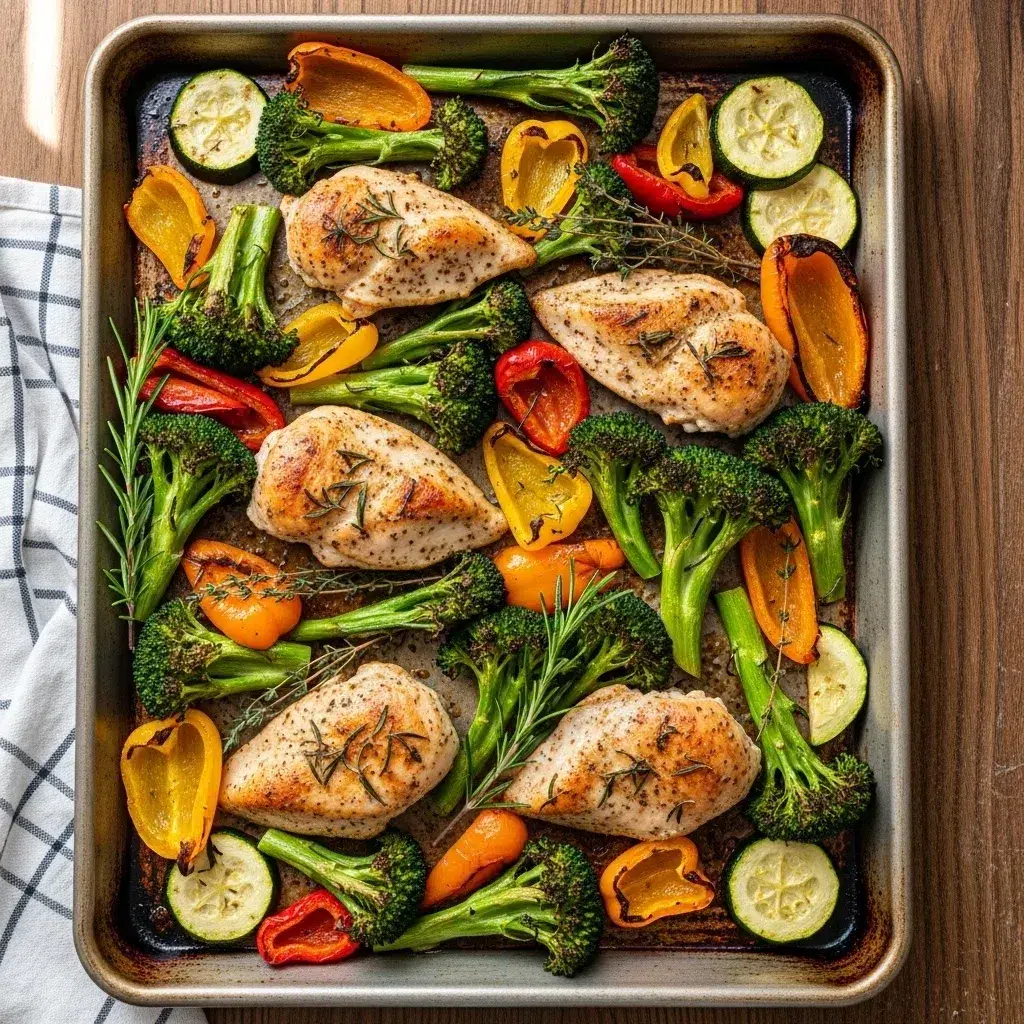
Achieving the perfect balance of juicy protein and tender-crisp vegetables requires more than just high heat; it requires an understanding of thermal conductivity and moisture management. This Sheet Pan Chicken and Veggies recipe delivers a symphony of textures and flavors by utilizing the efficiency of a single roasting surface. You will experience the deep, earthy caramelization of the vegetables alongside chicken that remains succulent and perfectly seasoned.
Most home cooks struggle with soggy produce or dry meat, but this method solves those issues through precise prep and heat distribution. By following the scientific principles of roasting, you can turn a simple weeknight dinner into a gourmet experience. This Sheet Pan Chicken and Veggies meal offers a vibrant, nutrient-dense solution for busy families who refuse to compromise on quality.
Why You’ll Love This Recipe
- Efficiency of Surface Area: The wide, flat design of the pan maximizes the Maillard reaction, ensuring every piece of Sheet Pan Chicken and Veggies develops a rich, golden-brown crust.
- Nutrient Density: This dish packs a massive punch of vitamins and minerals by combining lean protein with a colorful array of fiber-rich vegetables.
- Minimal Cleanup: Using a single pan reduces your post-dinner chores significantly, making this Sheet Pan Chicken and Veggies the ultimate practical meal.
- Customizable Flavor Profiles: The base seasoning provides a perfect canvas for any flavor profile, allowing you to experiment with different herbs and spices.
Ingredients You’ll Need
The quality of your Sheet Pan Chicken and Veggies depends entirely on the integrity of your ingredients. As a chef, I recommend selecting high-moisture vegetables that can withstand the intense dry heat of the oven without turning to mush.
| Ingredient | Amount | Why It Works |
|---|---|---|
| Chicken Breast | 1.5 lbs | Lean protein that absorbs seasonings quickly and cooks evenly when cubed. |
| Broccoli Florets | 2 cups | The “trees” catch the seasoning oil, creating crispy, charred edges. |
| Bell Peppers | 2 large | Add sweetness and a vibrant pop of vitamin C through caramelization. |
| Zucchini | 1 medium | Provides moisture and a soft texture contrast to the firm chicken. |
| Red Onion | 1 large | The natural sugars break down into a savory, jam-like consistency. |
| Extra Virgin Olive Oil | 3 tbsp | Acts as a heat conductor and emulsifies the dry spices for better coverage. |
| Dried Oregano & Thyme | 1 tsp each | These hardy herbs withstand high temperatures better than fresh ones. |
| Garlic Powder | 1 tsp | Distributes flavor more evenly than fresh garlic, which can burn at 400°F. |
| Smoked Paprika | 1/2 tsp | Adds a deep, wood-fired aroma without needing a grill. |
Substitutions & Variations
Adapting your Sheet Pan Chicken and Veggies is simple if you maintain the ratio of protein to produce. If you prefer a more decadent fat profile, swap the chicken breast for boneless, skinless chicken thighs. Thighs contain more intramuscular fat and connective tissue (collagen), which breaks down into gelatin, keeping the meat moist even if you overcook it slightly. For a plant-based alternative, extra-firm tofu or chickpeas provide a sturdy structure that browns beautifully alongside the vegetables.
When considering vegetable swaps, focus on density. If you want to use root vegetables like sweet potatoes or carrots in your Sheet Pan Chicken and Veggies, you must dice them smaller than the chicken or give them a 10-minute head start in the oven.
Low-carb enthusiasts can replace the corn or peppers with cauliflower or asparagus. To keep the profile healthy, always opt for heart-healthy fats like avocado oil or light olive oil, which have higher smoke points than butter or unrefined oils.
If you want to enjoy a richer flavor and juicier texture, consider using chicken thighs in your recipe. For a delightful dessert to follow your meal, try our Chocolate Sheet Cake to satisfy your sweet tooth.
Step-by-Step Instructions
- Preheat and Prep: Set your oven to 400°F (204°C). This temperature is the “sweet spot” for Sheet Pan Chicken and Veggies because it is high enough to trigger the Maillard reaction but not so high that it scorches the delicate vegetable cell walls.
- Fabricate the Ingredients: Cut your chicken and vegetables into uniform 1-inch pieces. Consistency is the secret to even cooking; if the pieces vary in size, the small ones will carbonize while the large ones remain raw in the center.
- Emulsify the Seasoning: In a large mixing bowl, whisk the olive oil with the salt, pepper, oregano, thyme, garlic powder, and smoked paprika. This ensures the fat-soluble compounds in the spices are fully activated and ready to coat your Sheet Pan Chicken and Veggies.
- The Toss: Add the chicken and vegetables to the bowl. Use your hands or large tongs to massage the oil mixture into every crevice. You want a thin, shimmering coat on every surface to maximize heat transfer.
- Arrange the Pan: Spread the mixture onto a heavy-duty rimmed baking sheet. Crucial Chef Tip: Ensure nothing is overlapping. If you crowd the pan, the moisture escaping the vegetables will create a steam cloud, resulting in limp, grey food instead of roasted Sheet Pan Chicken and Veggies.
- Roast: Place the pan on the center rack. Roast for 20 to 25 minutes. At the halfway mark, use a spatula to flip the ingredients, ensuring the side in contact with the hot metal changes.
- Final Check: Use an instant-read thermometer to verify the chicken has reached an internal temperature of 165°F. The vegetables should be tender with slightly charred edges.
Pro Tips for Success
The biggest mistake people make with Sheet Pan Chicken and Veggies is ignoring the physics of the sheet pan itself. Use a “half-sheet” pan made of heavy-gauge aluminum. These pans conduct heat rapidly and evenly. If you use a thin, dark-colored non-stick pan, the bottoms of your veggies may burn before the chicken is safe to eat.
Another technical tip involves “hygroscopy,” or the way salt draws out moisture. Do not salt your vegetables too early. If you let the raw Sheet Pan Chicken and Veggies sit in the bowl with salt for 20 minutes before roasting, the salt will pull the water out of the zucchini and mushrooms.
This creates a puddle on your tray, which leads to steaming. Season your Sheet Pan Chicken and Veggies immediately before they enter the oven to ensure a crisp finish.
Lastly, pay attention to the “carry-over cooking” effect. When you remove the tray from the oven, the internal energy of the chicken continues to rise by 2 or 3 degrees. Rest the Sheet Pan Chicken and Veggies for five minutes before serving. This allows the muscle fibers in the chicken to relax and reabsorb the juices, ensuring a succulent bite.
Understanding the right cookware is essential for cooking the perfect sheet pan meal. To try another exciting take on sheet pan recipes, check out our Sheet Pan Chicken Fajitas for a flavorful twist.
Storage & Reheating Tips
You can store leftovers of Sheet Pan Chicken and Veggies in an airtight glass container for up to four days in the refrigerator. To maintain the best texture, avoid the microwave if possible. Microwaves vibrate water molecules, which can make the chicken rubbery and the vegetables mushy through uneven heating.
Instead, reheat your Sheet Pan Chicken and Veggies in a toaster oven or air fryer at 350°F for about 5 to 7 minutes. This “second roast” helps crisp up the skin of the vegetables again.
If you must use a microwave, cover the dish with a damp paper towel to create a small amount of steam, which prevents the lean chicken breast from drying out completely. This recipe also works well for meal prep; you can portion the Sheet Pan Chicken and Veggies into containers with a side of quinoa or brown rice for a ready-to-go lunch.
What to Serve With This Recipe
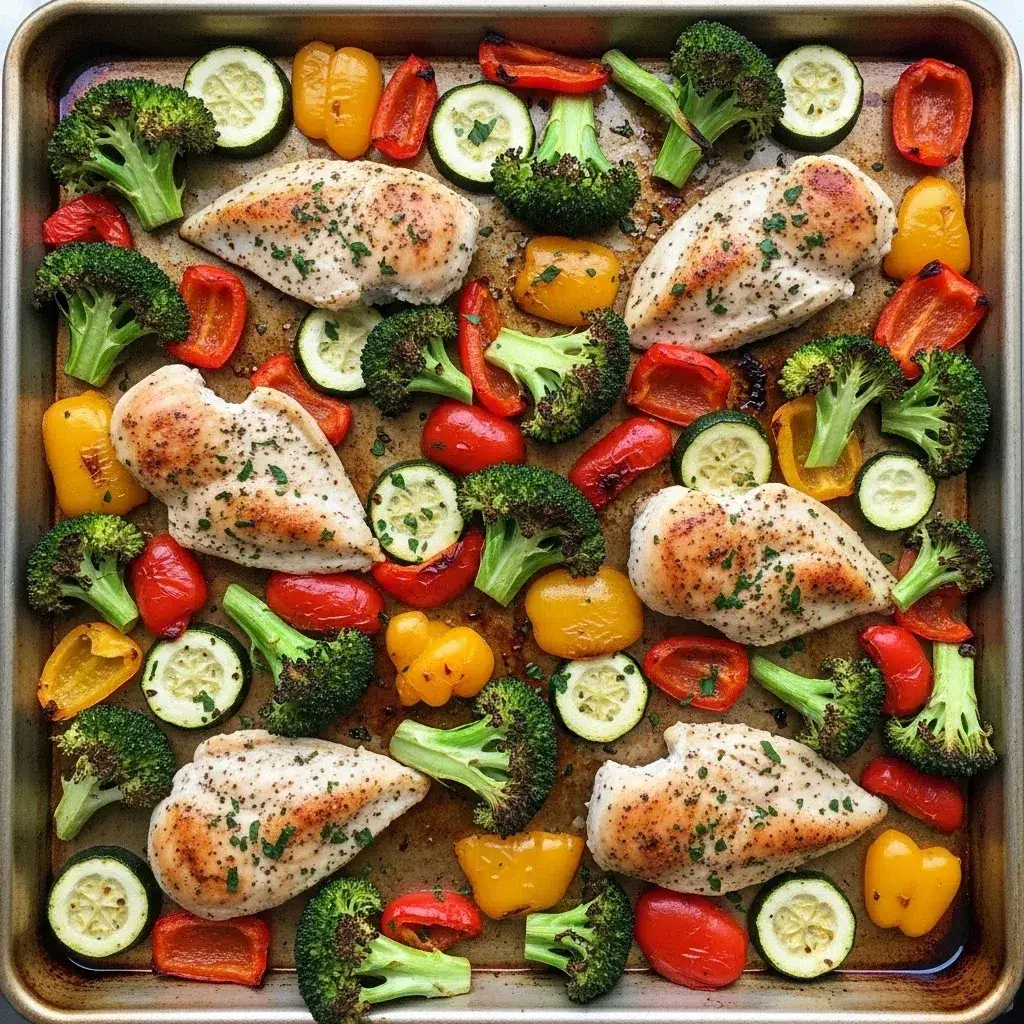
While Sheet Pan Chicken and Veggies is a complete meal on its own, adding a bright, acidic element can elevate the savory roasted notes. A simple arugula salad with a lemon-tahini dressing provides a sharp contrast to the caramelized onions and peppers. The bitterness of the greens cuts through the richness of the roasted oil.
If you require more complex carbohydrates, serve your Sheet Pan Chicken and Veggies over a bed of farro or wild rice. These grains offer a nutty texture that complements the earthy herbs.
For those sticking to a low-carb lifestyle, a side of roasted cauliflower mash or a fresh cucumber-feta salad adds volume without the heavy starch. Finally, a squeeze of fresh lemon juice over the entire tray right before serving acts as a flavor “brightener,” making the individual notes of the Sheet Pan Chicken and Veggies pop.
Adding different elements can greatly enhance your dish while keeping it simple. Consider complementing your meal with our refreshing Sheet Pan Mediterranean Chicken and Zucchini for a vibrant flavor profile.
FAQs
Can I use frozen vegetables for Sheet Pan Chicken and Veggies?
You can use frozen vegetables, but the results will differ. Frozen produce contains more internal ice crystals that rupture the cell walls. When roasted, these vegetables release more water, which may lead to steaming rather than browning. To mitigate this, roast the frozen vegetables at 425°F and do not thaw them beforehand; cook them straight from the freezer to maintain as much structural integrity as possible.
How do I prevent the chicken from drying out?
The key is the size of the cut and the cooking temperature. By cutting the chicken into uniform 1-inch cubes and roasting at 400°F, you ensure the exterior browns at the same rate the interior cooks. If you find your chicken is consistently dry, try using chicken thighs. The higher fat content in thighs provides a wider “window” of perfection, making the Sheet Pan Chicken and Veggies much more forgiving.
Why are my vegetables soggy instead of crispy?
Sogginess is usually the result of overcrowding the pan. When the vegetables release steam, that steam needs to escape into the oven cavity. If the pieces of Sheet Pan Chicken and Veggies are packed too tightly, the steam gets trapped underneath and around the food, effectively boiling it. Use two pans if necessary to ensure every piece has at least half an inch of “breathing room.”
Sheet pan cooking has gained popularity for its ability to create satisfying meals with minimal effort. Techniques related to this method enhance flavor and texture, making it a favorite among home cooks, as explored in this cooking article.
Nutrition Information (per serving)
This Sheet Pan Chicken and Veggies recipe provides a balanced macro profile suitable for various dietary goals. It is high in bioavailable protein and low in refined sugars.
| Nutrient | Amount |
|---|---|
| Calories | 345 kcal |
| Protein | 38g |
| Total Fat | 14g |
| Carbohydrates | 18g |
| Dietary Fiber | 5g |
| Sodium | 480mg |
Sheet Pan Chicken and Veggies
- Total Time: 45 mins
- Yield: 4 servings 1x
- Diet: Gluten Free
Description
This Sheet Pan Chicken and Veggies recipe delivers a symphony of textures and flavors by utilizing the efficiency of a single roasting surface. It's high in bioavailable protein and low in refined sugars.
Ingredients
1.5 lbs Chicken Breast
2 cups Broccoli Florets
2 large Bell Peppers
1 medium Zucchini
1 large Red Onio
3 tbsp Extra Virgin Olive Oil
1 tsp Dried Oregano
1 tsp Dried Thyme
1 tsp Garlic Powder
1/2 tsp Smoked Paprika
Instructions
- Preheat your oven to 400°F (204°C)
- Cut your chicken and vegetables into uniform 1-inch pieces
- In a large mixing bowl, whisk the olive oil with the salt, pepper, oregano, thyme, garlic powder, and smoked paprika
- Add the chicken and vegetables to the bowl and mix well
- Spread the mixture onto a heavy-duty rimmed baking sheet ensuring nothing is overlapping
- Roast for 20 to 25 minutes, flipping halfway through, until chicken reaches 165°F
- Let rest for 5 minutes before serving
Notes
Use a heavy-gauge aluminum half-sheet pan for best results.
Do not salt the vegetables too early to avoid sogginess.
Allow carry-over cooking to ensure juicy chicken.
- Prep Time: 20 mins
- Cook Time: 25 mins
- Category: Dinner
- Method: Baking
- Cuisine: American
Nutrition
- Serving Size: 1 bowl
- Calories: 345 kcal
- Sugar: 3g
- Sodium: 480mg
- Fat: 14g
- Saturated Fat: 2g
- Unsaturated Fat: 9g
- Trans Fat: 0g
- Carbohydrates: 18g
- Fiber: 5g
- Protein: 38g
- Cholesterol: 95mg