
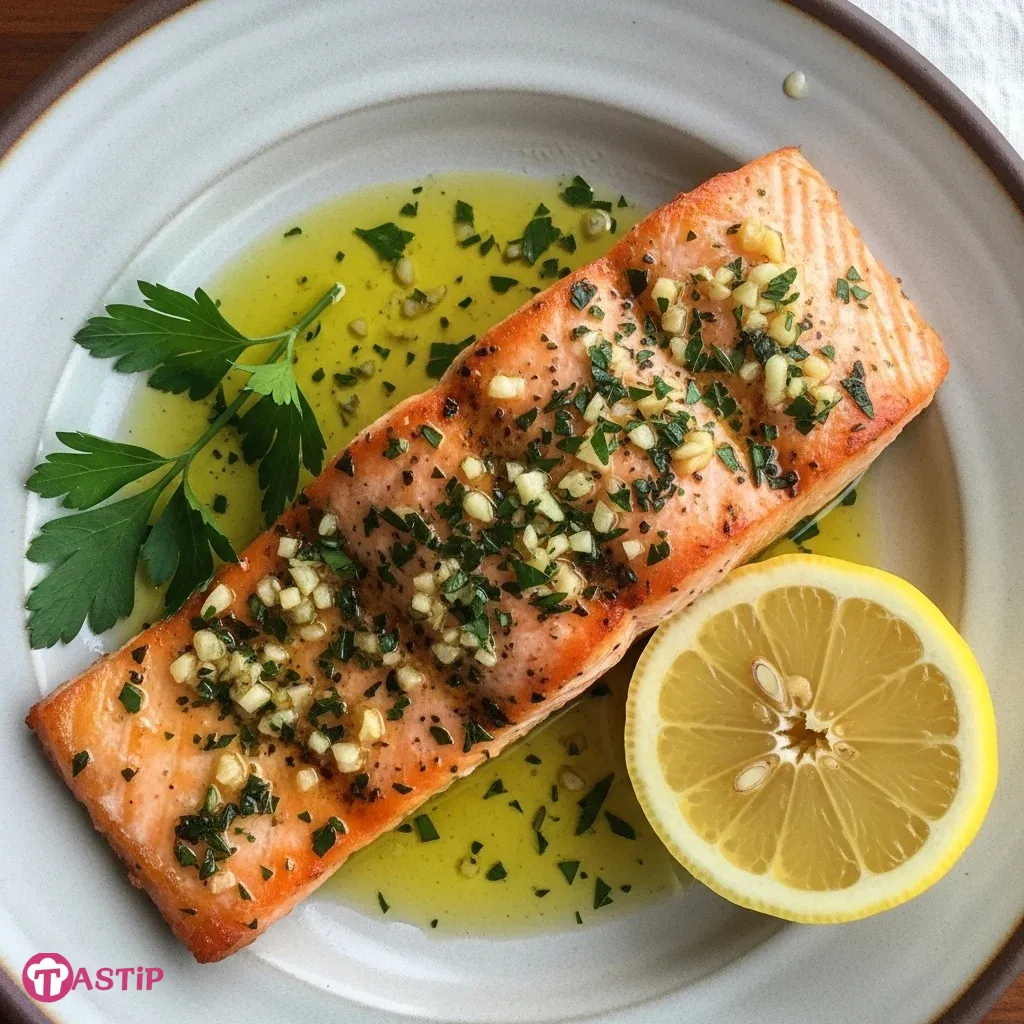
Preparing Grilled Garlic Salmon involves more than just tossing a piece of fish over a flame. As a former test kitchen chef, I focus on the synergy between the high-heat environment and the aromatic compounds in the garlic. When you place a seasoned fillet on a hot grate, you initiate the Maillard reaction, creating hundreds of flavor compounds that simply do not exist in raw food.
This recipe delivers a crispy, savory exterior that contrasts perfectly with the buttery, flakey interior of the fish. Achieving this balance requires an understanding of thermal density and protein coagulation. You will find that Grilled Garlic Salmon is not just a meal, but a lesson in heat management. Let’s dive into how we can master this classic dish together using scientific precision.
Why You’ll Love This Grilled Garlic Salmon Recipe
- Unmatched Flavor Profile: The combination of pungent garlic and smoke creates a deep, umami-rich crust that elevates the natural sweetness of the salmon.
- Perfect Texture: By utilizing high-heat searing techniques, you achieve a “glass-like” crispy skin while maintaining a succulent, medium-rare center.
- Nutrient Density: This Grilled Garlic Salmon provides a massive dose of Omega-3 fatty acids and high-quality protein, which are essential for heart health and muscle repair.
- Speed and Efficiency: Grilling is a rapid heat transfer method, meaning you can have a gourmet-quality dinner on the table in under 20 minutes.
- Culinary Education: This recipe teaches you how to manage moisture and temperature, making you a more confident cook every time you light the grill.
Ingredients You’ll Need
- Fresh Salmon Fillets: Look for “center-cut” fillets of roughly equal thickness. I recommend wild-caught King or Sockeye salmon because their higher fat content provides a safety net against overcooking, ensuring your Grilled Garlic Salmon remains moist.
- Fresh Garlic: Use whole cloves that you crush yourself. Pre-minced garlic in jars contains citric acid, which alters the pH balance and ruins the delicate flavor of the fish.
- Extra Virgin Olive Oil: This acts as our primary heat conductor. It also helps the garlic aromatics penetrate the lipid layers of the fish.
- Fresh Lemon Juice: The citric acid acts as a “brightener.” It breaks down the heavy fats on the palate and balances the intense savory notes of the garlic.
- Kosher Salt: Use coarse grains for better control. Salt denatures the surface proteins, which aids in the formation of that beautiful crust.
- Fresh Cracked Black Pepper: This adds a foundational heat that complements the pungency of the garlic without overwhelming the salmon’s natural flavor.
- Fresh Parsley: This is more than a garnish. The chlorophyll in fresh herbs provides a grassy contrast to the charred elements of the Grilled Garlic Salmon.
Substitutions & Variations
Note: This video is for demonstration purposes and may use a slightly different method.

If you cannot find high-quality salmon, you can substitute it with Steelhead Trout. Trout has a similar fat profile and muscle structure, making it an excellent alternative for this Grilled Garlic Salmon preparation. Furthermore, if you are looking to reduce your sodium intake, swap the kosher salt for a blend of dried lemon peel and onion powder.
This maintains the flavor complexity without the extra salt. For those who enjoy a bit of heat, adding a teaspoon of red chili flakes to the garlic oil infusion creates a “Spicy Grilled Garlic Salmon” that excites the senses. If you prefer a more herbal profile, replace the parsley with fresh dill or tarragon.
These herbs contain oils that pair exceptionally well with fatty fish. Lastly, if you are watching your fat intake, you can use avocado oil instead of olive oil. Avocado oil has a higher smoke point, which can be beneficial if you are grilling over an extremely hot charcoal fire.
If you’re looking for a fish alternative that’s equally flavorful, consider using Steelhead Trout for your Grilled Garlic Salmon. Learn more in this guide on Grilled Salmon for tips on achieving the best results.
Step-by-Step Instructions
- Prep the Fish: Remove your salmon from the refrigerator 20 minutes before cooking. This allows the internal temperature to rise slightly, ensuring even heat distribution. Pat the skin extremely dry with paper towels; moisture is the enemy of a good sear.
- Create the Garlic Infusion: In a small bowl, whisk together the olive oil, freshly crushed garlic, lemon juice, salt, and pepper. Let this sit for 10 minutes. This time allows the allicin in the garlic to develop fully, which is the compound responsible for that signature pungent aroma in Grilled Garlic Salmon.
- Preheat the Grill: Clean your grates thoroughly and heat the grill to medium-high (approximately 400°F to 450°F). A clean, well-oiled grate prevents sticking, which is the most common failure when making Grilled Garlic Salmon.
- Apply the Marinade: Brush the garlic mixture generously over the flesh side of the salmon. Do not marinate for more than 30 minutes, or the acid in the lemon juice will begin to “cook” the fish, changing its texture before it even hits the grill.
- The Initial Sear: Place the salmon on the grill, flesh-side down first. Close the lid and let it cook undisturbed for about 3 to 4 minutes. This creates the primary flavor crust through the Maillard reaction.
- The Flip: Carefully flip the fish using a wide spatula. The salmon should release easily from the grate once the crust has formed. If it sticks, wait another 30 seconds.
- Finish on the Skin: Cook for another 3 to 5 minutes on the skin side. This protects the delicate flesh from direct heat while allowing the skin to become crispy. Use an instant-read thermometer to check for an internal temperature of 125°F for medium-rare.
- Rest the Fish: Remove the Grilled Garlic Salmon from the heat and let it rest on a warm plate for 5 minutes. Carryover cooking will bring the final temperature to a perfect 130°F.
Pro Tips for Success
The most important technical tip I can offer is to understand the “Albumin” factor. Have you ever seen that white goop seeping out of your salmon? That is albumin, a protein that escapes when the muscle fibers contract too quickly from high heat.
To prevent this in your Grilled Garlic Salmon, avoid overcooking and ensure your grill isn’t so hot that it “shocks” the fish. Additionally, always grill with the skin on. The skin acts as a thermal barrier, protecting the fat-rich belly meat from drying out.
Another professional secret involves the “Oil the Food, Not the Grate” rule. While you should keep your grates clean, heavily oiling the fish itself ensures a more consistent non-stick surface. Finally, use a digital thermometer.
Visual cues like “flaking with a fork” often mean the fish is already overcooked. For the best Grilled Garlic Salmon, precision is your best friend.
To master the grilling process, it’s key to understand how to prevent albumin from escaping your salmon. For tips on pairing a complete meal with your Grilled Garlic Salmon, check out this delicious Grilled Salmon Caesar Salad recipe.
Storage & Reheating Tips
If you have leftover Grilled Garlic Salmon, store it in an airtight glass container in the refrigerator for up to two days. To maintain the integrity of the proteins, I recommend eating leftovers cold on a salad. However, if you must reheat, do so gently.
Place the salmon in a 275°F oven with a splash of water or broth, covered with foil, for about 8 to 10 minutes. Avoid the microwave at all costs; the rapid vibration of water molecules will turn your beautiful fish into a rubbery, sulfurous mess. Reheating Grilled Garlic Salmon requires the same patience as the initial cook.
What to Serve With This Recipe
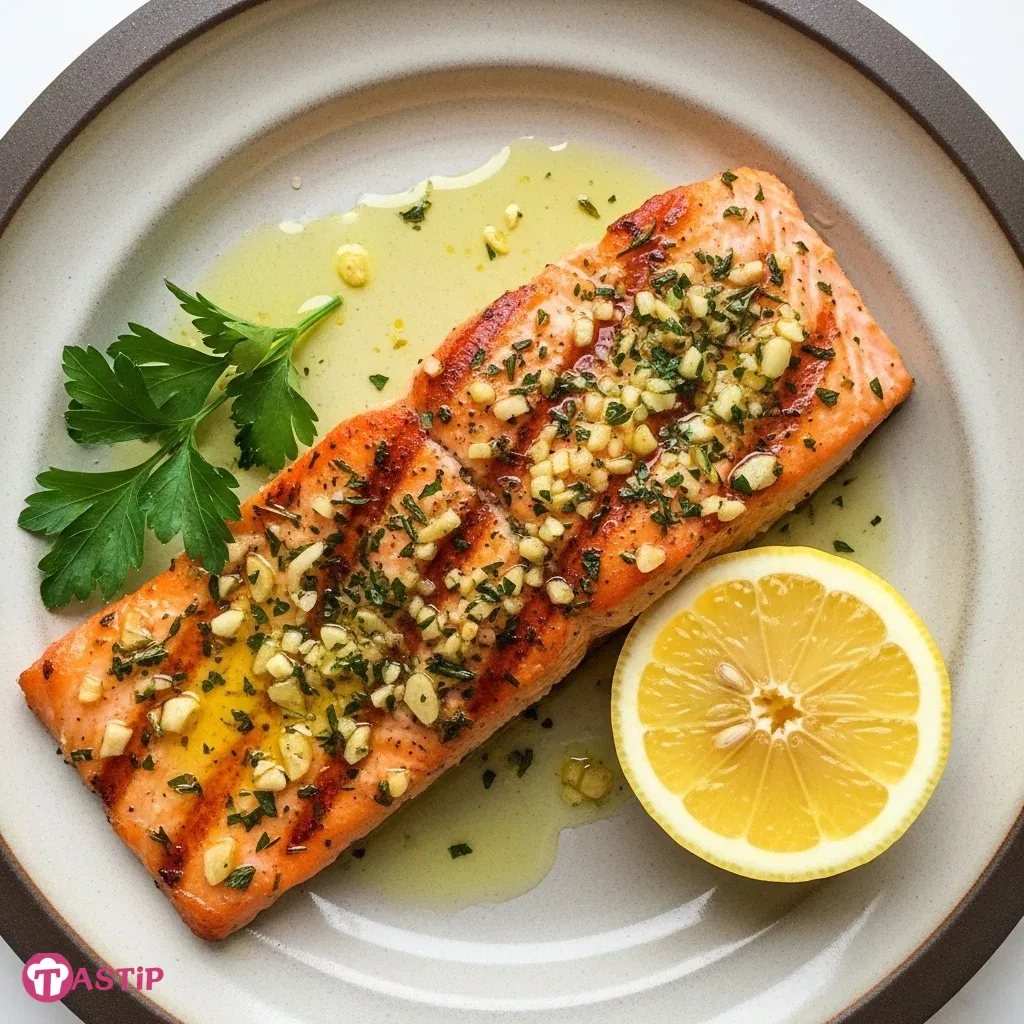
When pairing sides with Grilled Garlic Salmon, you want components that offer a textural contrast or an acidic counterpoint. A bright arugula salad with a balsamic vinaigrette works perfectly because the bitterness of the greens cuts through the rich oils of the salmon. Additionally, roasted asparagus or grilled broccolini provides a satisfying crunch and earthy tones that complement the garlic.
If you want a heartier meal, serve the fish over a bed of quinoa or wild rice pilaf. These grains soak up the residual garlic oil and lemon juice, ensuring no flavor goes to waste. For a truly professional presentation, add a dollop of Greek yogurt mixed with dill and cucumber on the side of your Grilled Garlic Salmon to provide a cooling element.
To create the perfect balance of flavors, consider sides that complement the richness of the salmon. A bright dish such as Tomato Soup with Grilled Cheese could be the ideal match to serve alongside your Grilled Garlic Salmon.
FAQs
How do I know when the salmon is done without a thermometer?
While a thermometer is best, you can use the “touch test.” Gently press the thickest part of the Grilled Garlic Salmon. If it feels firm but still has a slight “give” (similar to the feel of your palm just below the thumb), it is likely at a perfect medium. If it feels hard, it is overcooked.
Can I make this Grilled Garlic Salmon on a grill pan indoors?
Yes, you can certainly use a cast-iron grill pan. Ensure you turn on your kitchen exhaust fan, as the garlic and oil will produce a significant amount of smoke at the high temperatures required to sear the fish properly. The science of heat transfer remains the same whether you are indoors or outdoors.
Why does my salmon always stick to the grill?
Sticking usually happens for two reasons: the grill wasn’t hot enough, or the fish was too wet. Ensure your grates are preheated for at least 15 minutes and that you have patted the salmon completely dry. A dry surface allows for immediate protein coagulation, which naturally releases the Grilled Garlic Salmon from the metal.
Grilled Garlic Salmon is a popular dish that highlights the use of garlic to enhance the natural flavors of the fish, creating a delicious combination. This method of preparation not only provides a mouthwatering flavor but also retains the fish’s essential nutrients, making it a healthful choice for any meal, as explained in this article.
Nutrition Information (per serving)
This nutritional profile reflects a standard 6-ounce fillet of wild-caught salmon prepared with the specified garlic and olive oil marinade.
| Nutrient | Amount per Serving |
|---|---|
| Calories | 340 kcal |
| Total Fat | 18g |
| Saturated Fat | 3g |
| Protein | 38g |
| Carbohydrates | 2g |
| Fiber | 0g |
| Omega-3 Fatty Acids | 2,200mg |
By following these scientific principles and focusing on ingredient quality, you will master the art of Grilled Garlic Salmon. Enjoy the process and the delicious results.
Print
Grilled Garlic Salmon
- Total Time: 30 mins
- Yield: 4 servings 1x
- Diet: Gluten Free
Description
This Grilled Garlic Salmon recipe features a high-heat cooking technique that creates a crispy exterior and a flaky, buttery interior. The combination of garlic, lemon, and fresh herbs results in a flavorful dish rich in Omega-3 fatty acids.
Ingredients
4 fillets Fresh Salmo
4 cloves Fresh Garlic
4 tablespoons Extra Virgin Olive Oil
2 tablespoons Fresh Lemon Juice
1 teaspoon Kosher Salt
1/2 teaspoon Fresh Cracked Black Pepper
2 tablespoons Fresh Parsley
Instructions
- Remove the salmon from the refrigerator 20 minutes before cooking to allow it to come to room temperature
- Pat the skin of the salmon dry with paper towels
- In a small bowl, whisk together the olive oil, crushed garlic, lemon juice, salt, and pepper. Let it infuse for 10 minutes
- Preheat the grill to medium-high (400°F to 450°F) and clean the grates
- Brush the garlic mixture generously over the flesh side of the salmon for no more than 30 minutes
- Place the salmon on the grill, flesh-side down, and cook for 3 to 4 minutes
- Carefully flip the salmon using a spatula and cook for an additional 3 to 5 minutes on the skin-side, until it reaches an internal temperature of 125°F for medium-rare
- Remove from heat and let rest for 5 minutes before serving
Notes
For a spicy variation, add 1 teaspoon of red chili flakes to the garlic oil infusion.
If you prefer a different herb, substitute parsley with dill or tarragon.
- Prep Time: 20 mins
- Cook Time: 10 mins
- Category: Dinner
- Method: Grilling
- Cuisine: American
Nutrition
- Serving Size: 1 fillet
- Calories: 340 kcal
- Sugar: 0g
- Sodium: 300mg
- Fat: 18g
- Saturated Fat: 3g
- Unsaturated Fat: 15g
- Trans Fat: 0g
- Carbohydrates: 2g
- Fiber: 0g
- Protein: 38g
- Cholesterol: 90mg