
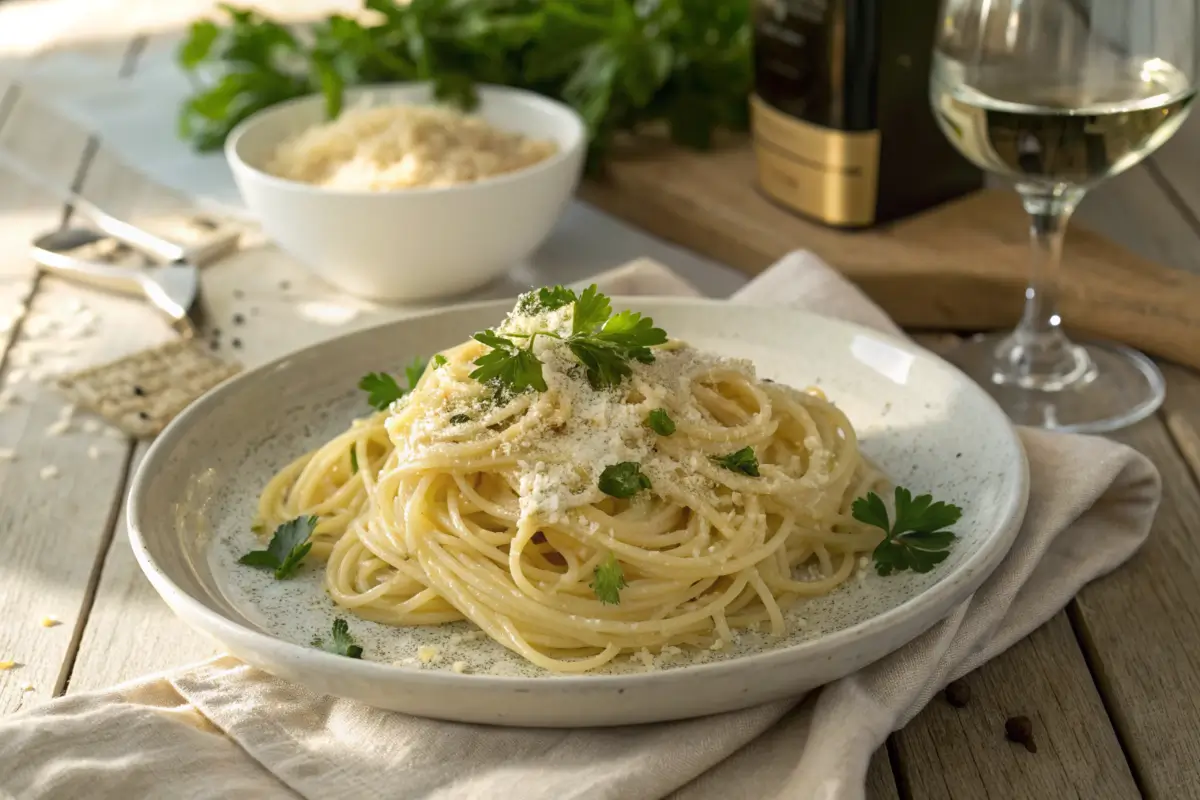
Alfredo Spaghetti is a classic dish loved for its creamy, rich flavor and comforting appeal. But what makes it truly special? This ultimate guide dives deep into the origins of Alfredo sauce, the traditional and modern ingredients, preparation techniques, and tips to elevate your spaghetti game. Whether you’re a home cook or a food enthusiast, this article will transform how you make and enjoy Alfredo Spaghetti. Let’s begin!
The Ultimate Guide to Alfredo Spaghetti
The Origins of Alfredo Sauce
Alfredo di Lelio’s Creation
Alfredo sauce owes its name to Alfredo di Lelio, an Italian restaurateur who crafted this delightful concoction in Rome during the early 1900s. Seeking to please his wife who had lost her appetite after childbirth, he created a simple yet creamy sauce combining butter and Parmesan cheese—a culinary love story in itself!
How Alfredo Spaghetti Gained Popularity in the United States
So, how did this humble Italian dish make its way into American hearts (and kitchens)? Hollywood stars visiting Rome fell in love with it, eventually introducing it to the United States. Over time, the traditional recipe evolved into the indulgent dish we know today.
Keep reading to discover the essential ingredients that make homemade Alfredo spaghetti unforgettable.
History and Origin
The Origins of Alfredo Sauce
Alfredo di Lelio’s Creation
The creamy goodness of Alfredo sauce traces back to Rome in the early 20th century, when Alfredo di Lelio first prepared this iconic dish. It all started as a heartfelt gesture—Alfredo wanted to craft something nourishing yet simple for his wife, who had lost her appetite after giving birth. By combining just two humble ingredients, butter and Parmesan cheese, he created a dish so decadent it became legendary. The secret? Emulsifying the sauce with hot pasta water to achieve that velvety texture without heavy creams.
Little did Alfredo know, his invention would become a staple in kitchens worldwide, proving that even the simplest recipes can create a lasting impact.
Introduction to the United States
Alfredo Spaghetti’s fame didn’t stop in Rome. Its journey across the Atlantic began when Hollywood celebrities Douglas Fairbanks and Mary Pickford stumbled upon Alfredo’s restaurant during their honeymoon. Captivated by the creamy, indulgent pasta, they brought its magic back to the United States. Before long, word spread like wildfire, and Alfredo Spaghetti found its place on restaurant menus, modified to suit American tastes by adding ingredients like heavy cream and garlic.
This cross-cultural culinary phenomenon not only cemented Alfredo sauce as a household name but also showcased how food can bridge continents and bring people together.
Stay tuned for the next section as we dive into the key components that make up this timeless dish!
Traditional Alfredo Sauce Components
Key Ingredients in Classic Alfredo Sauce
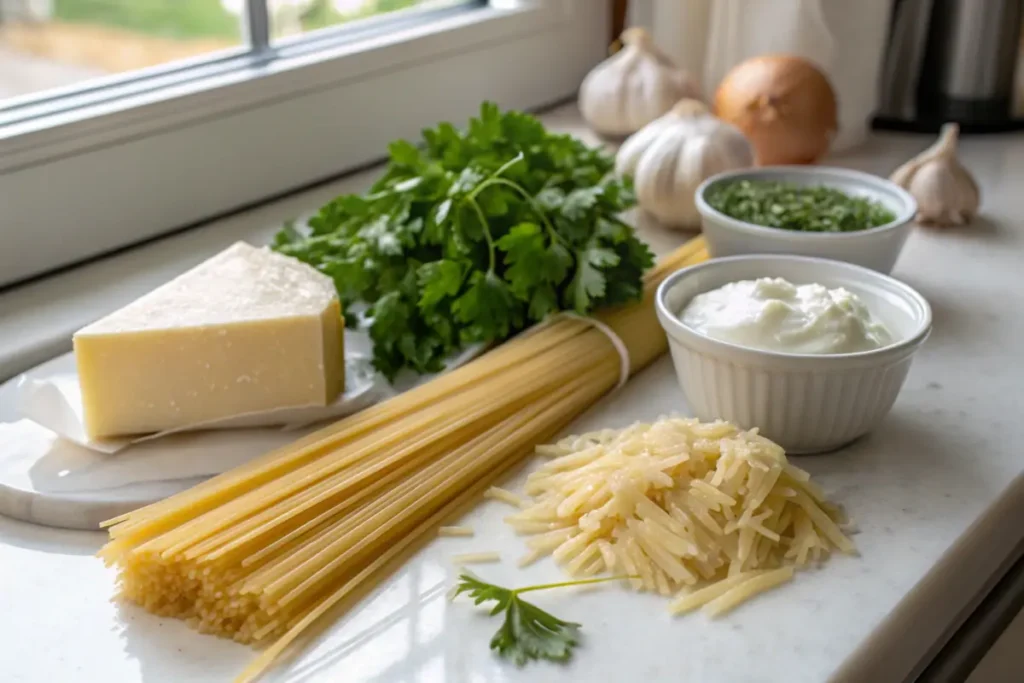
Butter and Parmesan Cheese
At its heart, Alfredo sauce is a masterpiece of simplicity, relying on just two main ingredients: butter and Parmigiano-Reggiano cheese. These elements work in harmony to create the luscious texture and rich flavor that make Alfredo Spaghetti irresistible.
Butter serves as the foundation, lending creaminess and a silky mouthfeel to the sauce. Its fat content binds beautifully with the cheese, ensuring a smooth consistency. Meanwhile, Parmigiano-Reggiano, often referred to as the “King of Cheeses,” is the star of the show. This aged cheese contributes a nutty, umami-packed depth that transforms the sauce into something extraordinary.
For the best results, always opt for high-quality, unsalted butter and freshly grated Parmigiano-Reggiano. Pre-grated cheese often contains anti-caking agents that can prevent the sauce from achieving its signature smoothness. Together, butter and Parmesan set the stage for Alfredo’s unparalleled richness.
The Role of Pasta Water
While butter and Parmesan provide the flavor, starchy pasta water is the unsung hero of homemade Alfredo spaghetti. When you cook pasta, starches naturally release into the boiling water, creating a liquid gold that’s perfect for emulsifying the sauce.
Adding a splash of this hot, starchy water while tossing the pasta helps bind the butter and cheese into a creamy, cohesive sauce. Without it, the ingredients might separate, leaving you with an oily mess rather than the velvety Alfredo texture you’re craving.
Here’s the trick: Don’t drain all your pasta water! Save a cup or so before straining your noodles. Use it sparingly, adding small amounts until your sauce reaches the ideal consistency. This simple yet crucial step ensures a silky, restaurant-quality Alfredo Spaghetti every time.
As we move forward, we’ll explore how modern variations have reimagined this classic dish without losing its traditional charm. Stay with us!
Modern Variations of Alfredo Spaghetti
Contemporary Twists on Alfredo Spaghetti
Incorporating Cream
One of the most notable changes to traditional Alfredo sauce is the addition of heavy cream, an adaptation largely embraced by American chefs and home cooks. While the original recipe relied solely on butter and Parmigiano-Reggiano for its creaminess, heavy cream adds an extra layer of richness and smoothness to the sauce. This tweak not only enhances the sauce’s indulgent texture but also makes it more forgiving for novice cooks, as it helps prevent the butter and cheese from separating.
To incorporate heavy cream, it’s typically heated gently with butter before adding Parmesan. The result is a thicker, creamier sauce that clings to the pasta more effectively. This modern version has become the default Alfredo sauce for many, elevating the dish into a more luxurious, comforting meal.
Adding Proteins and Vegetables
Alfredo Spaghetti has evolved beyond its simple origins to become a versatile canvas for creative additions. By incorporating proteins and vegetables, the dish transforms into a more filling, well-rounded meal that suits diverse palates and dietary preferences.
- Chicken Alfredo Spaghetti: Grilled or pan-seared chicken adds a hearty, savory element to the dish. The tender, juicy meat pairs beautifully with the creamy sauce, making it a family favorite.
- Shrimp Alfredo Spaghetti: For seafood lovers, plump, garlicky shrimp bring a burst of flavor and an elegant twist to Alfredo Spaghetti. Their delicate sweetness complements the sauce’s richness.
- Broccoli Alfredo Spaghetti: Looking for a healthier spin? Adding steamed or roasted broccoli provides a pop of color and crunch, not to mention a dose of nutrients. The mild, earthy flavor of broccoli pairs seamlessly with the sauce.
- Mushroom Alfredo Spaghetti: Sautéed mushrooms lend an earthy depth that enhances the sauce’s umami profile. Whether you use button, cremini, or portobello mushrooms, they make an excellent addition to this creamy pasta dish.
Combining multiple ingredients, like chicken and broccoli or shrimp and mushrooms, opens up endless possibilities for customization. These modern variations not only expand the dish’s versatility but also keep it exciting and adaptable to different occasions.
Incorporating cream and a variety of proteins or vegetables breathes new life into classic Alfredo spaghetti while honoring its roots. Next, we’ll discuss how to choose the perfect pasta to complement your Alfredo creations!
Part 5: Selecting the Right Pasta
Choosing the Ideal Pasta for Alfredo Sauce
Spaghetti vs. Fettuccine
When it comes to pairing pasta with Alfredo sauce, the choice between spaghetti and fettuccine often sparks debate. Both bring unique textures to the dish, but their differences can affect the overall experience.
Spaghetti, with its slender, cylindrical shape, creates a lighter mouthfeel. Its smooth surface allows the creamy sauce to coat each strand evenly, making every bite deliciously satisfying. Spaghetti is an excellent choice if you prefer a more delicate texture or are serving Alfredo with additional ingredients like shrimp or mushrooms, as it allows the toppings to shine.
Fettuccine, on the other hand, is the traditional pasta for Alfredo sauce. Its wide, flat ribbons are designed to hold rich, creamy sauces, offering a luxurious bite with every forkful. Fettuccine’s robust texture pairs exceptionally well with heavier versions of Alfredo, especially those incorporating proteins like chicken or vegetables like broccoli.
Ultimately, your choice depends on personal preference, but both pastas can deliver a fantastic Alfredo experience.
Alternative Pasta Options
If you’re looking to switch things up, several other pasta types pair beautifully with Alfredo sauce:
- Linguine: Similar to fettuccine but slightly thinner, linguine offers a balance between spaghetti’s delicacy and fettuccine’s heft.
- Penne: This tubular pasta captures sauce inside its ridges, delivering bursts of creamy Alfredo in every bite. It’s also perfect for baked Alfredo dishes.
- Tagliatelle: Another ribbon pasta like fettuccine, tagliatelle is slightly wider and provides a hearty base for Alfredo sauce.
- Cavatappi: This spiral-shaped pasta holds onto the sauce exceptionally well, adding a fun twist to the dish.
Experimenting with different pastas can introduce exciting textures and flavors, giving you a fresh take on Alfredo Spaghetti. In the next section, we’ll delve into crafting the perfect homemade Alfredo Spaghetti step-by-step!
Part 6: Crafting the Perfect Alfredo Spaghetti
Step-by-Step Recipe for Homemade Alfredo Spaghetti
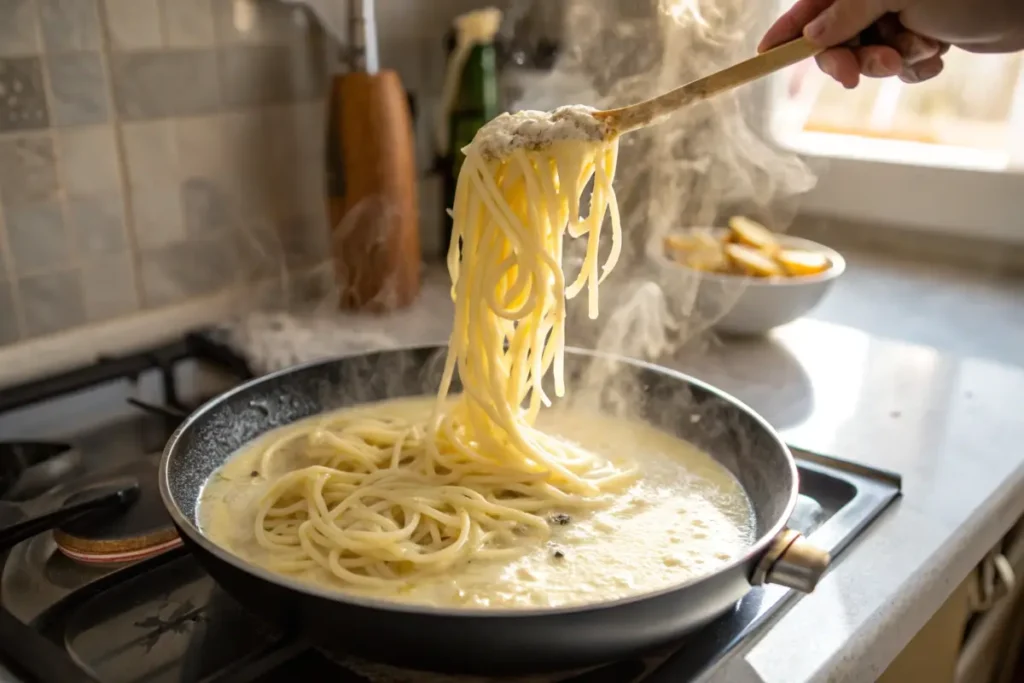
Ingredients List
Here’s everything you’ll need to make creamy, indulgent Alfredo Spaghetti from scratch:
- 12 oz spaghetti: Cooked al dente for the perfect texture.
- 4 tbsp unsalted butter: High-quality butter enhances the sauce’s richness.
- 1 cup freshly grated Parmigiano-Reggiano cheese: For that authentic nutty flavor.
- 1 cup heavy cream: Adds extra creaminess to the American-style Alfredo.
- 2 garlic cloves: Minced, for a subtle depth of flavor (optional).
- ½ cup reserved pasta water: Key to achieving a smooth, emulsified sauce.
- Salt and black pepper: To taste, for seasoning.
- Fresh parsley: Finely chopped, for garnish.
Optional add-ons: Cooked chicken, shrimp, broccoli, or mushrooms to customize your Alfredo Spaghetti.
Cooking Instructions
Follow these steps to create a restaurant-quality Alfredo Spaghetti at home:
Cook the Spaghetti
Bring a large pot of salted water to a boil. Add the spaghetti and cook until al dente, following the package instructions (usually 8–10 minutes). Before draining, reserve ½ cup of the pasta water and set it aside.
Prepare the Base Sauce
In a large skillet or pan over medium heat, melt the butter. If using garlic, sauté it in the butter for 1–2 minutes until fragrant, but not browned.
Add the Cream and Cheese
First, lower the heat to medium-low, and then slowly pour in the heavy cream. While doing this, stir continuously to combine it with the melted butter. Next, gradually add the freshly grated Parmesan cheese, stirring constantly to ensure it melts evenly. As a result, the sauce will start to thicken and take on a velvety texture.
Incorporate Pasta Water
After preparing the base sauce, slowly add small amounts of the reserved pasta water to the mixture. Be sure to stir well after each addition, as this step emulsifies the sauce. Consequently, it creates a silky consistency that clings beautifully to the spaghetti.
Season the Sauce
Now, taste the sauce and adjust the flavor with salt and black pepper as needed. However, be cautious with the salt, since Parmesan cheese is naturally salty and can easily over-season the dish.
Toss the Spaghetti
Finally, add the cooked spaghetti directly into the pan with the sauce. Using tongs, thoroughly toss the pasta to ensure every strand is evenly coated in the creamy Alfredo goodness.
Customize Your Dish (Optional)
If adding proteins or vegetables, toss them in at this stage. For example, cooked chicken or shrimp, or lightly steamed broccoli, can be mixed into the spaghetti for a hearty twist.
Serve and Garnish
Plate the Alfredo Spaghetti immediately, and then sprinkle it with fresh parsley for a pop of color and added freshness. Finally, serve it warm and enjoy!
Pro Tip: To ensure the sauce remains creamy and smooth, avoid overheating it after combining the pasta. Otherwise, excessive heat may cause the butter and cheese to separate. Instead, use gentle heat, as this is key to maintaining the sauce’s perfect texture.
Ultimately, this foolproof recipe guarantees a bowl of Alfredo Spaghetti that’s rich, comforting, and packed with flavor. So, stick around as we delve into common mistakes to avoid for achieving the best results every time!
Common Mistakes to Avoid
Pitfalls to Watch Out for When Making Alfredo Spaghetti
Overheating the Sauce
One of the most common mistakes when making Alfredo sauce is overheating it. Excessive heat can cause the butter and Parmesan to separate, resulting in a greasy, clumpy mess instead of a creamy, smooth sauce. To prevent this, always cook the sauce over medium or low heat. Once the cheese has melted into the butter and cream, avoid prolonged cooking and stir gently to maintain the sauce’s emulsified texture.
Incorrect Pasta Cooking
Cooking the pasta incorrectly can also derail your Alfredo spaghetti. Overcooked pasta turns mushy and struggles to hold the sauce, while undercooked pasta is too firm for the dish. Aim for al dente—firm yet tender pasta. Additionally, always reserve some pasta water before draining. This starchy water is essential for emulsifying the sauce and achieving a velvety consistency. Forgetting this step can leave your Alfredo sauce feeling dry and unbalanced.
Nutritional Information
Understanding the Nutritional Profile of Alfredo Spaghetti
Caloric Content
Alfredo spaghetti is undeniably indulgent, with a calorie count that reflects its rich ingredients. A standard serving, roughly 1 ½ cups, contains about 400–600 calories, depending on the portion size and additional ingredients like heavy cream or proteins. While it’s a satisfying meal, it’s best enjoyed in moderation as part of a balanced diet.
Macronutrient Breakdown
Here’s a general breakdown of macronutrients per serving of Alfredo Spaghetti:
- Carbohydrates: Approximately 50–60g, primarily from the pasta.
- Proteins: Around 10–15g, with potential increases if you add chicken, shrimp, or other proteins.
- Fats: Roughly 20–30g, thanks to the butter, cream, and Parmesan cheese.
Understanding these numbers can help you make mindful choices and balance your meal with lighter sides or healthy variations.
Healthier Alternatives
Making Alfredo Spaghetti Healthier
Using Lighter Ingredients
If you want to enjoy Alfredo spaghetti without the guilt, consider using lighter ingredients. Swap heavy cream for low-fat milk or a plant-based alternative like unsweetened almond milk. For butter, try a reduced-fat spread or olive oil for a healthier fat profile. Additionally, using nutritional yeast instead of Parmesan can reduce fat while keeping the dish flavorful.
Incorporating Whole Grains
Another simple way to make this dish healthier is by choosing whole-grain or chickpea-based pasta. These options add fiber and protein, making your Alfredo spaghetti more filling and nutritious. Whole-grain pasta also has a nuttier flavor that complements the creaminess of the sauce, providing a satisfying twist on the classic dish.
Small changes to the ingredients can significantly improve the nutritional value without sacrificing taste, allowing you to enjoy Alfredo Spaghetti guilt-free.
Pairing Suggestions
Best Side Dishes and Beverages to Serve with Alfredo Spaghetti
Complementary Side Dishes
Pairing the right sides with Alfredo spaghetti enhances its flavor and creates a balanced meal. A crisp Caesar salad with romaine lettuce, croutons, and a tangy dressing adds freshness to counter the richness of the sauce. Garlic bread is another classic accompaniment, providing a crunchy, buttery contrast. Roasted vegetables like asparagus or zucchini also work beautifully, introducing earthy flavors and vibrant colors to your plate.
Ideal Beverage Pairings
While Alfredo Spaghetti is often paired with wine, non-alcoholic options can also complement the dish. Sparkling water with a slice of lemon, or even a lightly flavored iced tea, provides a refreshing contrast to the creamy pasta. These choices cleanse your palate and balance the meal without overwhelming the dish’s delicate flavors.
Storing and Reheating Leftovers
Proper Storage and Reheating Techniques for Alfredo Spaghetti
Refrigeration Guidelines
To store leftover Alfredo spaghetti, transfer it to an airtight container once it cools to room temperature. Properly sealed, it can last in the refrigerator for up to 3–4 days. Avoid leaving the pasta out for extended periods, as dairy-based sauces can spoil quickly.
Reheating Methods
For reheating, the stovetop is your best option to retain the sauce’s creamy texture. Place the spaghetti in a skillet or saucepan over low heat and add a splash of milk or cream to revive the sauce. Stir gently until heated through. Alternatively, you can use a microwave: heat in short intervals, stirring between each to prevent the sauce from separating. Either method ensures your Alfredo Spaghetti stays delicious even the next day.
Frequently Asked Questions
Common Queries About Alfredo Spaghetti
What Makes Spaghetti Sauce Taste Better?
Enhancing the flavor of spaghetti sauce starts with using fresh, high-quality ingredients. For Alfredo Spaghetti, freshly grated Parmesan cheese is a must—it delivers a nutty, umami-rich punch that pre-shredded varieties can’t match. Adding fresh herbs like parsley or basil just before serving introduces a pop of color and a layer of brightness that balances the richness of the sauce Learn More
What Pasta Goes with Alfredo Sauce?
While fettuccine is the classic choice for Alfredo sauce, spaghetti is a fantastic alternative for a slightly lighter texture. Other options include linguine, which has a similar shape to fettuccine but is thinner, making it ideal for a creamier dish. For those who prefer tubular pasta, penne or rigatoni capture the sauce inside their ridges, delivering bursts of flavor in every bite Learn More
What Is the Difference Between Alfredo and Carbonara Sauce?
While both sauces are creamy and indulgent, Alfredo and Carbonara differ significantly in their ingredients and preparation. Alfredo relies on butter, Parmesan cheese, and often heavy cream to achieve its smooth texture. It’s rich, mild, and perfect for pairing with a variety of pasta types.Learn More
What Makes Alfredo Sauce Taste Better?
To elevate Alfredo sauce, start with the freshest ingredients. High-quality Parmesan or Pecorino cheese adds depth, while using real butter ensures a smooth, creamy base. A small amount of freshly minced garlic can introduce a subtle savoriness without overpowering the dish Learn More