
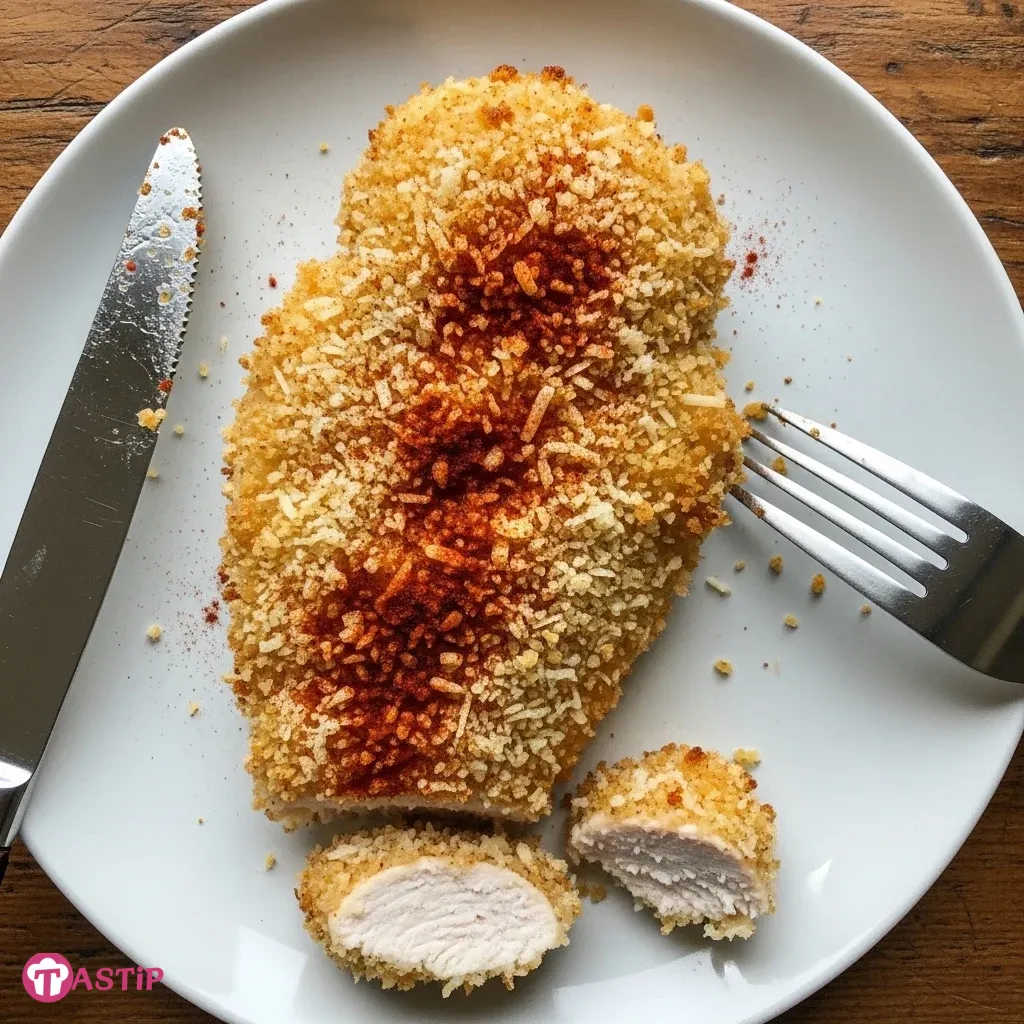
Achieving the perfect Parmesan Crusted Chicken Breast requires more than just a pan and some heat; it involves mastering the delicate balance of moisture management and protein coagulation. This dish delivers a multi-sensory experience where the sharp, salty notes of aged cheese meet the tender, succulent interior of perfectly cooked poultry. As a former test kitchen chef, I have spent years analyzing how different breading techniques affect the final texture of a Parmesan Crusted Chicken Breast.
We are not just making dinner; we are conducting a precise experiment in the Maillard reaction to create a golden-brown crust that stays crispy until the very last bite. By understanding the structural integrity of your breading layers, you can transform a simple piece of meat into a gourmet masterpiece. This recipe focuses on technical accuracy to ensure your Parmesan Crusted Chicken Breast remains juicy on the inside and intensely flavorful on the outside.
Why You’ll Love This Recipe
- The combination of Panko and aged cheese creates a superior crunch compared to traditional flour-based coatings.
- Using a Parmesan Crusted Chicken Breast technique locks in internal moisture through the process of indirect heat transfer.
- This recipe utilizes high-quality fats and proteins, making it a satiating and nutritionally dense meal option.
- The high umami content of the Parmesan acts as a natural flavor enhancer without the need for excessive sodium.
- Technical precision ensures that your Parmesan Crusted Chicken Breast will have a uniform crust that never peels or slides off.
Ingredients You’ll Need
In the world of food science, the quality of your inputs dictates the success of your outputs. For a Parmesan Crusted Chicken Breast, you must select ingredients that can withstand high temperatures without degrading. I recommend using chicken breasts that have been air-chilled, as they contain less retained water, which prevents steam from ruining your crust. The Parmesan should be finely grated to increase its surface area, allowing it to fuse more effectively with the breadcrumbs during the cooking process.
| Ingredient | Function | Quantity |
| Boneless Chicken Breasts | The primary protein source; requires uniform thickness for even heat distribution. | 2 large (approx. 1 lb) |
| Finely Grated Parmesan | Provides structural umami and contributes to the Maillard reaction. | 1/2 cup |
| Panko Breadcrumbs | Light, airy crumbs that offer maximum surface area for a crunchier Parmesan Crusted Chicken Breast. | 1/2 cup |
| All-Purpose Flour | Acts as a desiccant, drying the surface of the meat for better adhesion. | 1/4 cup |
| Large Eggs | The protein-based “glue” that binds the dry ingredients to the poultry. | 2 units |
| Garlic Powder & Paprika | Oil-soluble aromatics that deepen the color and flavor profile. | 1 tsp each |
| Kosher Salt & Black Pepper | Essential for seasoning and altering protein structures for better moisture retention. | To taste |
| Avocado Oil or Ghee | High-smoke point fats necessary for achieving a golden-brown exterior without burning. | 3 tbsp |
Substitutions & Variations
If you have dietary restrictions, you can still enjoy a high-quality Parmesan Crusted Chicken Breast by making smart technical swaps. For those following a gluten-free lifestyle, almond flour or crushed pork rinds serve as an excellent substitute for Panko. These alternatives have a higher fat content, which can actually enhance the flavor profile, though you may need to lower your cooking temperature slightly to prevent over-browning.
If you want a lower-calorie version, you can utilize an air fryer, though you will sacrifice some of the rich mouthfeel provided by pan-searing. You can also swap the traditional Parmesan for a Pecorino Romano if you prefer a sharper, saltier tang in your Parmesan Crusted Chicken Breast. For a spicy variation, incorporate a teaspoon of cayenne pepper into the flour dredging station to introduce heat at the base layer of the seasoning.
Step-by-Step Instructions
- Mechanical Tenderization: Place the chicken breasts between two sheets of plastic wrap. Use a meat mallet to pound them to a uniform thickness of about 1/2 inch. This ensures that every part of your Parmesan Crusted Chicken Breast reaches the target internal temperature simultaneously.
- The Desiccation Phase: Pat the chicken dry with paper towels. Season both sides with salt and pepper. Dredge each piece in the flour, shaking off any excess. This step is crucial because flour absorbs surface moisture, allowing the egg wash to bond securely.
- The Protein Binding: Whisk the eggs in a shallow bowl until the proteins are fully broken down and the mixture is homogenous. Submerge the floured chicken into the egg wash, ensuring complete coverage.
- The Encapsulation: Combine the Panko, grated Parmesan, garlic powder, and paprika in a third bowl. Press the chicken firmly into this mixture. Apply pressure to ensure the crumbs and cheese adhere to the egg-washed surface, creating a robust shell for your Parmesan Crusted Chicken Breast.
- Thermal Application: Heat the avocado oil in a heavy-bottomed skillet over medium-high heat. Once the oil reaches approximately 350°F, carefully place the chicken in the pan. Do not crowd the skillet, as this will drop the oil temperature and lead to oil absorption rather than searing.
- The Maillard Reaction: Cook for 4 to 5 minutes per side. You are looking for a deep golden-brown color. Use an instant-read thermometer to ensure the internal temperature reaches 165°F. This guarantees the Parmesan Crusted Chicken Breast is safe to eat while remaining juicy.
- The Resting Phase: Transfer the chicken to a wire rack rather than a plate. This allows air to circulate underneath, preventing steam from softening the bottom crust. Let it rest for 3 minutes to allow the juices to redistribute through the protein fibers.
Pro Tips for Success
One of the most common mistakes when making a Parmesan Crusted Chicken Breast is using pre-shredded cheese from a canister. These products often contain anti-caking agents like cellulose, which interfere with the melting process and prevent the crust from forming a cohesive bond. Always grate your cheese fresh from a wedge for the best results.
Furthermore, the temperature of your meat matters. If you drop cold chicken into a hot pan, the muscle fibers will contract violently, squeezing out moisture. Let your chicken sit at room temperature for about 15 minutes before you begin the dredging process.
This reduces the thermal shock and results in a much more tender Parmesan Crusted Chicken Breast. Finally, consider using a cast-iron skillet. The high thermal mass of cast iron provides consistent, even heat that is essential for achieving that uniform, professional-grade crust.
Storage & Reheating Tips
While a Parmesan Crusted Chicken Breast is best enjoyed immediately after the resting phase, you can store leftovers in an airtight container for up to three days. However, the refrigerator environment is humid, which will inevitably soften the crust. To revive the original texture, avoid the microwave at all costs; the microwave excites water molecules, causing them to steam the breading from the inside out.
Instead, use an oven or an air fryer. Reheat the Parmesan Crusted Chicken Breast at 350°F for about 5 to 8 minutes. This dry heat evaporates any accumulated moisture and recrisps the cheese and breadcrumbs, returning the dish to its former glory. If you are meal prepping, consider undercooking the chicken slightly (to about 155°F) so that the reheating process brings it to the perfect final temperature without drying it out.
What to Serve With This Recipe
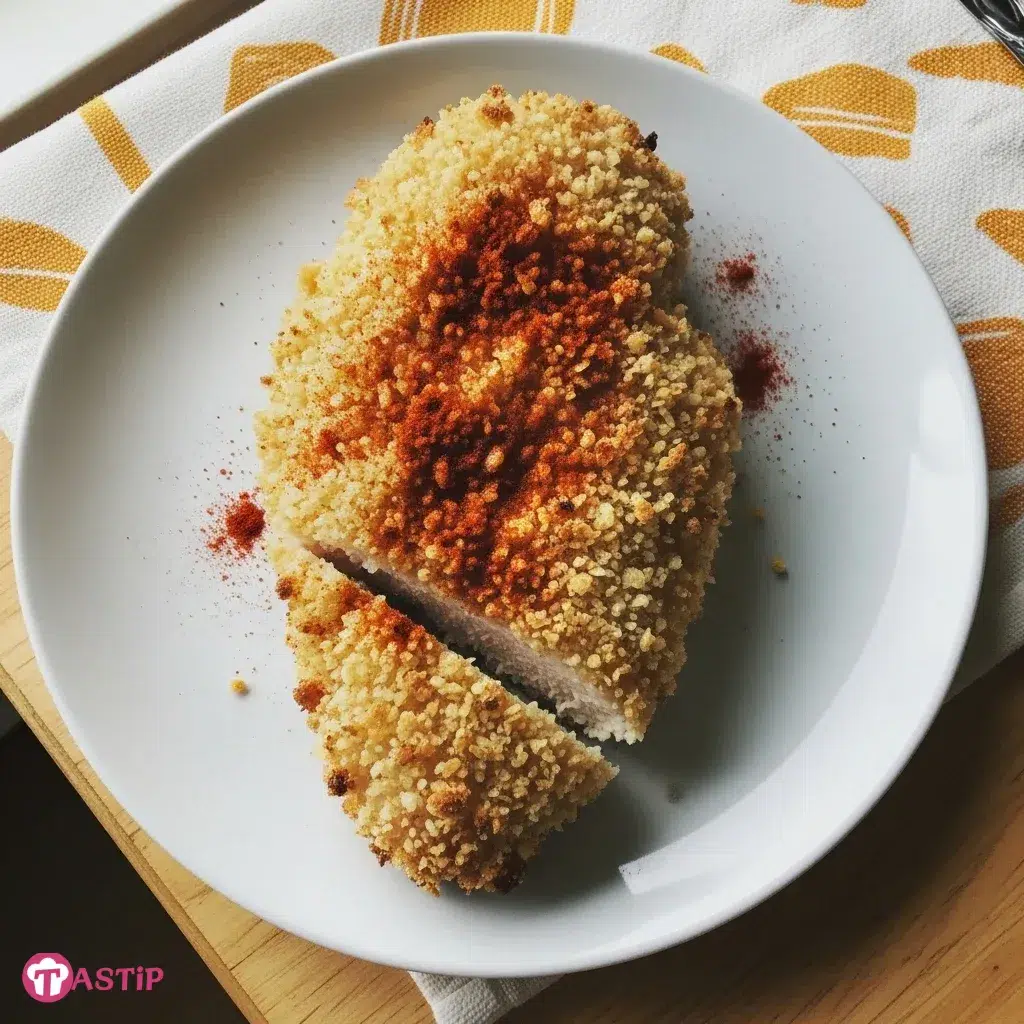
To balance the rich, savory profile of a Parmesan Crusted Chicken Breast, I recommend pairing it with acidic or fibrous side dishes. A bright arugula salad with a lemon-tahini dressing provides a sharp contrast to the salty crust. Roasted cruciferous vegetables, such as broccoli or Brussels sprouts, also work exceptionally well; their natural bitterness cuts through the fat of the Parmesan.
If you want a more substantial meal, serve the Parmesan Crusted Chicken Breast over a bed of zucchini noodles or lightly sautéed spinach with garlic. These pairings maintain the nutritional integrity of the meal while adding various textures that complement the crunch of the chicken. Avoid heavy, creamy sauces that might overwhelm the delicate flavor of the aged cheese and sog the crust you worked so hard to perfect.
For a delicious pairing that enhances your meal, check out the High Protein Garlic Parmesan Chicken Pasta, which adds a nutritious twist to your dining experience.
FAQs
Why does the breading fall off my chicken?
Breading usually falls off because the surface of the chicken was too wet before the flouring stage. If moisture is trapped under the crust, it turns into steam during cooking, which physically pushes the breading away from the meat. Ensure you pat the chicken completely dry and use the standard three-step dredging process to create a strong chemical bond for your Parmesan Crusted Chicken Breast.
Can I bake this in the oven instead of pan-frying?
Yes, you can bake a Parmesan Crusted Chicken Breast. Place the breaded chicken on a greased wire rack over a baking sheet. Bake at 400°F for 15-20 minutes. While you won’t get the same level of browning as you would with pan-searing, the wire rack ensures that hot air circulates around the entire piece, keeping the bottom from getting soggy.
What is the best type of Parmesan to use?
For a Parmesan Crusted Chicken Breast, use real Parmigiano-Reggiano if possible. It has a higher concentration of glutamate, which provides that intense savory flavor. Make sure it is finely grated; large shreds won’t adhere as well to the meat and may fall off in the pan during the flipping process.
The culinary technique of breading chicken can be highly refined to create dishes like Parmesan Crusted Chicken Breast, where the unique flavors of cheese and spices come together to elevate the poultry. Mastering the art of cooking this dish involves understanding the principles of heat and moisture management, making it a favorite among both home cooks and professional chefs alike.
Nutrition Information (per serving)
This nutritional profile reflects one standard serving of Parmesan Crusted Chicken Breast prepared using the pan-searing method with avocado oil.
| Metric | Value |
| Calories | 385 kcal |
| Total Protein | 42g |
| Total Fat | 18g |
| Net Carbohydrates | 12g |
| Sodium | 580mg |
Parmesan Crusted Chicken Breast
- Total Time: 30 mins
- Yield: 4 servings 1x
- Diet: Gluten Free
Description
Achieving the perfect Parmesan Crusted Chicken Breast involves mastering moisture management and protein coagulation, delivering a multi-sensory experience with sharp, salty notes of aged cheese and tender poultry. The recipe focuses on technical accuracy for a juicy interior and flavorful crust.
Ingredients
2 large Boneless Chicken Breasts
1/2 cup Finely Grated Parmesa
1/2 cup Panko Breadcrumbs
1/4 cup All-Purpose Flour
2 units Large Eggs
1 tsp Garlic Powder
1 tsp Paprika
Kosher Salt to taste
Black Pepper to taste
3 tbsp Avocado Oil or Ghee
Instructions
- Place the chicken breasts between two sheets of plastic wrap and pound them to a uniform thickness of about 1/2 inch
- Pat the chicken dry with paper towels, season with salt and pepper, and dredge in flour
- Whisk the eggs in a shallow bowl and submerge the floured chicken into the egg wash
- Combine the Panko, grated Parmesan, garlic powder, and paprika in a bowl. Press the chicken into this mixture to ensure adherence
- Heat the avocado oil in a skillet over medium-high heat and add the chicken, cooking for 4 to 5 minutes per side until golden-brown and the internal temperature reaches 165°F
- Transfer to a wire rack and let rest for 3 minutes before serving
Notes
Use freshly grated Parmesan cheese for the best crust.
Let the chicken sit at room temperature for about 15 minutes before cooking to reduce thermal shock.
- Prep Time: 20 mins
- Cook Time: 10 mins
- Category: Dinner
- Method: Pan-frying
- Cuisine: American
Nutrition
- Serving Size: 1 piece of chicken
- Calories: 385 kcal
- Sugar: 0 g
- Sodium: 580 mg
- Fat: 18 g
- Saturated Fat: 6 g
- Unsaturated Fat: 10 g
- Trans Fat: 0 g
- Carbohydrates: 12 g
- Fiber: 1 g
- Protein: 42 g
- Cholesterol: 160 mg