
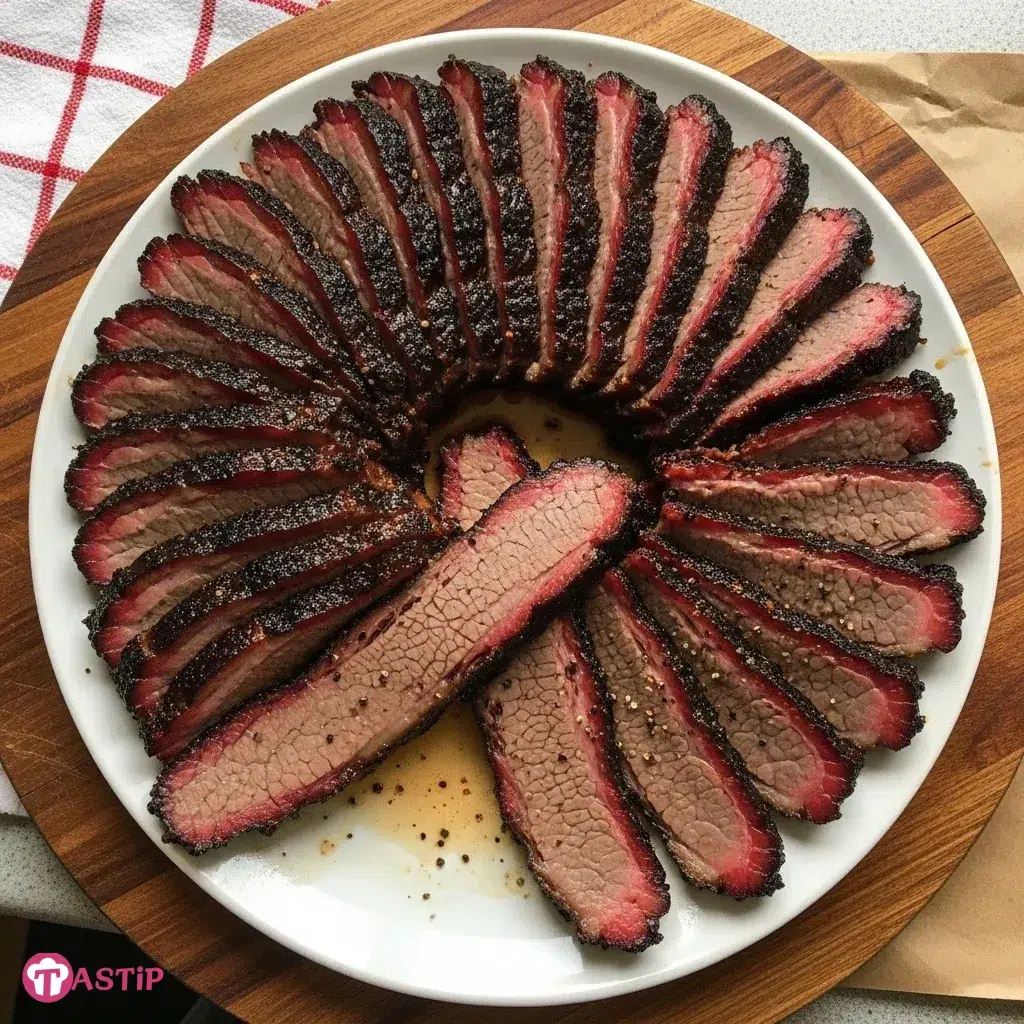
Few dishes command as much respect and reverence in the culinary world as a perfectly executed Texas Smoked Brisket. This legendary centerpiece of Lone Star barbecue boasts a pitch-black, savory crust known as bark and a luscious, melting interior that defines comfort food. Every bite delivers a symphony of oak smoke, coarse black pepper, and rich beef fat that coats the palate with pure satisfaction.
Mastering this recipe requires patience, as the low and slow process transforms a tough cut of meat into a tender masterpiece. Whether you are a backyard enthusiast or a seasoned pitmaster, achieving that iconic smoke ring is a rite of passage. Prepare your taste buds for an authentic journey into the heart of Texas tradition, where simple ingredients create extraordinary flavors.
To fully appreciate the craft of Texas Smoked Brisket, understanding the smoking technique is essential. Check out our guide on the best methods to smoke meat, which can help you perfect your skills in the art of barbecue: Smoking Techniques for Beginners.
Why You’ll Love This Texas Smoked Brisket
The choice of brisket is critical to the outcome of your dish. For more insights on selecting the best cuts of meat, visit our detailed section on choosing quality meats: Choosing the Right Cuts.
- The Texas Smoked Brisket delivers an incredible depth of smoky flavor that you simply cannot replicate with any other cooking method.
- Despite the long cook time, the preparation remains surprisingly simple, relying on a minimalist rub that lets the high-quality beef shine.
- This recipe provides a massive source of high-quality protein and healthy fats, making it a satiating option for those following low-carb or paleo lifestyles.
- The leftovers are incredibly versatile, allowing you to create gourmet tacos, sandwiches, or breakfast hashes throughout the week.
Understanding the nutritional benefits of brisket can help you appreciate its value even more. Explore our article on healthy meats and their dietary benefits: Benefits of Meat in Your Diet.
Ingredients You’ll Need
Transforming leftovers into delicious meals is a great way to minimize waste. Discover creative uses for your smoked brisket in our guide on leftover ideas: Creative Leftover Recipes.
In the world of authentic barbecue, the quality of your meat determines your success. Seek out a “Packer Choice” or “Prime” grade brisket, as the intramuscular fat, also known as marbling, ensures the meat stays juicy during the long smoking process. Central Texas style focuses on a simple “Dalmatian rub”—just salt and pepper—to highlight the natural beefiness of the Texas Smoked Brisket. Avoid over-complicating the flavor profile; let the smoke and the beef speak for themselves.
| Ingredient | Quantity | Notes |
|---|---|---|
| Whole Beef Brisket (Packer Cut) | 12–15 lbs | Look for a thick “flat” and a well-marbled “point.” |
| Coarse Black Pepper | 1/2 cup | 16-mesh grind is preferred for the best bark. |
| Kosher Salt | 1/2 cup | Use coarse salt to match the texture of the pepper. |
| Granulated Garlic | 1 tablespoon | Optional: adds a subtle savory depth. |
| Apple Cider Vinegar | 1 cup | For spritzing to maintain moisture and acidity. |
| Water | 1 cup | Mixed with vinegar for the spritz. |
Substitutions & Variations
If you are looking to make this Texas Smoked Brisket even healthier or wish to cater to specific dietary needs, consider these swaps. For a lower-sodium version, reduce the kosher salt by half and increase the amount of smoked paprika or garlic powder to maintain a bold flavor. You can also substitute the traditional beef fat for high-quality grass-fed tallow when wrapping the meat to boost the nutrient profile.
If you cannot find a full packer brisket, a smaller “brisket flat” works well, though you must monitor the temperature closely to prevent drying. For those who enjoy a hint of sweetness without refined sugar, add a teaspoon of monk fruit sweetener to your rub for a subtle caramelization that mimics brown sugar.
Step-by-Step Instructions
- Prepare the Meat: Start by trimming your Texas Smoked Brisket while it is cold. Remove the hard “deckle” fat and trim the fat cap down to a uniform 1/4-inch thickness. This ensures the fat renders properly and the smoke penetrates the meat.
- Apply the Rub: Mix your kosher salt, coarse black pepper, and garlic powder in a bowl. Apply the rub generously to all sides of the brisket, including the edges. Press the spices into the meat firmly to ensure they stick.
- Fire Up the Smoker: Preheat your smoker to a steady 225°F (107°C). Use hardwood like post oak or hickory for the most authentic flavor. Place a water pan inside the smoker to maintain a humid environment.
- Begin the Smoke: Place the brisket on the smoker grates with the fat cap facing the heat source (usually fat-side up in most offset smokers). Close the lid and let the smoke work its magic.
- Spritz Regularly: After the first 3 hours, begin spritzing the meat every hour with the mixture of apple cider vinegar and water. This prevents the edges from burning and helps develop the dark bark.
- The Texas Crutch: When the internal temperature of the Texas Smoked Brisket reaches approximately 165°F (74°C) and the bark is well-set, wrap it tightly in pink butcher paper or aluminum foil. This helps the meat push through the “stall” (a period where the temperature plateaus).
- Finish the Cook: Return the wrapped brisket to the smoker. Continue cooking until the internal temperature reaches 203°F (95°C) in the thickest part of the flat. The meat should feel like soft butter when probed.
- The Essential Rest: Remove the brisket from the smoker but keep it wrapped. Let it rest in an insulated cooler (without ice) for at least 2 to 4 hours. Resting allows the juices to redistribute, ensuring every slice is moist.
- Slice and Serve: Slice the Texas Smoked Brisket against the grain. The “flat” and the “point” have grains running in different directions, so adjust your knife angle as you reach the middle of the brisket.
Pro Tips for Success
Achieving the perfect Texas Smoked Brisket requires more than just following steps; it requires an eye for detail. First, always look for “blue smoke.” If your smoker is billowing thick white smoke, your fire is choked of oxygen, which will lead to a bitter, creosote taste. Aim for a thin, nearly invisible pale blue wisp.
Second, do not rush the resting phase. A brisket that is sliced too early will lose its juices instantly, leaving you with dry meat. If you have the time, a 4-hour rest is the secret of many professional barbecue joints. Third, pay attention to the “jiggle.” When you pick up a finished, rested brisket, it should wobble like gelatin; this indicates that the tough connective tissues have fully broken down into collagen.
Storage & Reheating Tips
If you have leftover Texas Smoked Brisket, store it properly to maintain its legendary texture. Wrap the meat tightly in plastic wrap or vacuum seal it to prevent oxidation, then keep it in the refrigerator for up to four days. For longer storage, the freezer is your friend; vacuum-sealed brisket can last up to three months without losing quality.
When it comes to reheating, avoid the microwave at all costs as it toughens the proteins. Instead, place the sliced meat in a baking dish with a splash of beef broth or a few pats of butter. Cover the dish tightly with foil and heat it in a 250°F (120°C) oven until just warmed through. This gentle method preserves the moisture and the integrity of the bark.
What to Serve With This Recipe
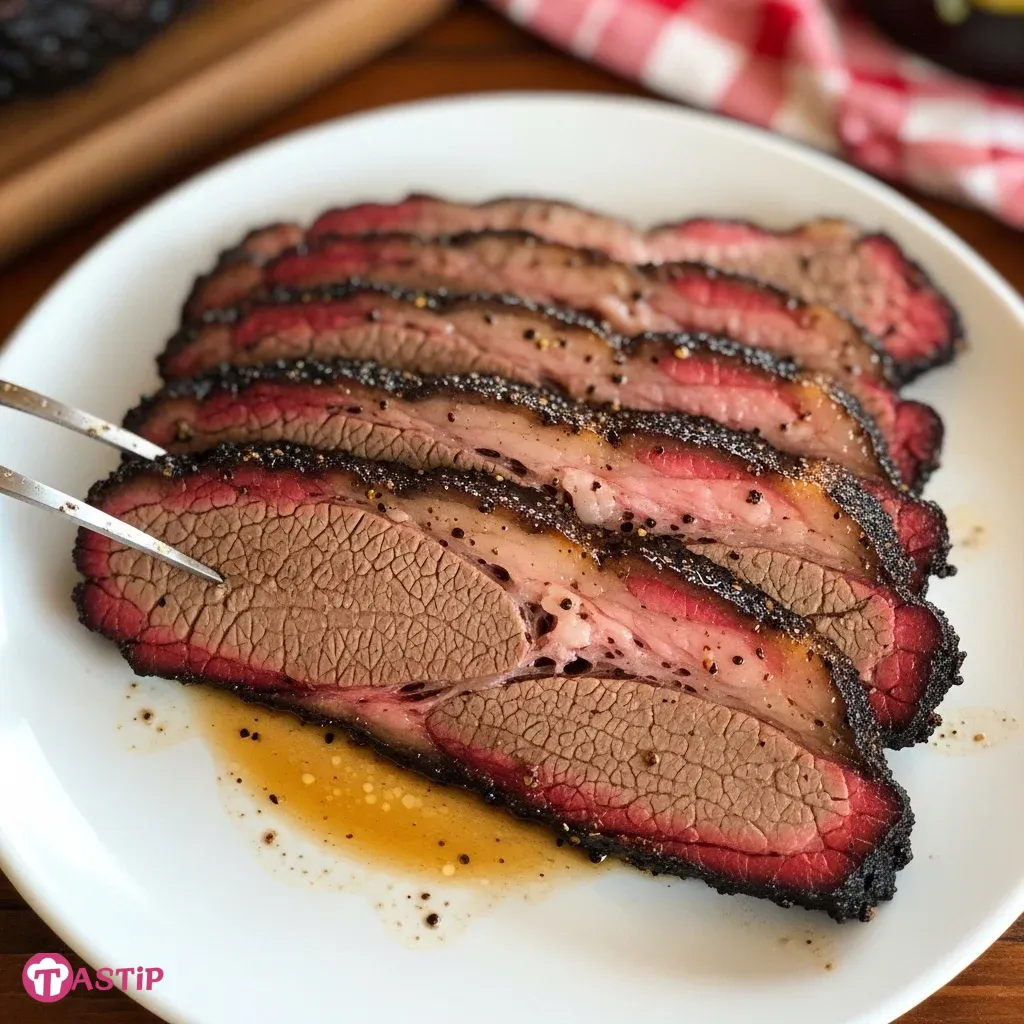
To balance the rich, fatty nature of the Texas Smoked Brisket, I always recommend serving it with bright, acidic, and nutrient-dense sides. A crisp, vinegar-based coleslaw provides a refreshing crunch that cuts through the richness of the beef. For a warm vegetable option, consider roasted Brussels sprouts with a drizzle of balsamic glaze or a medley of grilled asparagus and bell peppers.
Traditional Texas garnishes like sliced raw white onions, pickled jalapeños, and dill pickles are essential for providing a sharp contrast to the smoky meat. If you want a starch, a small serving of smoked sweet potatoes offers a healthier, fiber-rich alternative to heavy potato salads.
FAQs
What is the best wood for smoking a Texas Smoked Brisket?
Post Oak is the gold standard for an authentic Texas Smoked Brisket. It provides a mild, clean smoky flavor that doesn’t overpower the beef. However, hickory and pecan are excellent alternatives if you prefer a slightly more aggressive smoke profile. Avoid softwoods like pine or cedar, as they contain resins that produce unpleasant soot.
How do I know when the brisket is done without a thermometer?
While a digital thermometer is highly recommended for accuracy, you can use the “probe test.” Insert a thin metal skewer or a toothpick into the thickest part of the meat. If it enters and exits with absolutely no resistance—like it’s sliding into a jar of peanut butter—your Texas Smoked Brisket is ready to rest. Also, look for the “bend test” where a slice draped over your finger bends easily without breaking.
Why is my brisket dry even though I cooked it for a long time?
Dryness usually occurs if you didn’t reach a high enough internal temperature to melt the fat, or if the meat didn’t have enough marbling to begin with. Conversely, if you cook it too fast at a high temperature, the muscle fibers contract and squeeze out all the moisture before the fat can render. Always aim for a steady, low temperature and choose a well-marbled grade of beef for your Texas Smoked Brisket.
Texas Smoked Brisket is a revered dish in American barbecue tradition characterized by its rich flavors and unique smoking method. Aspects like cooking techniques and ingredient selection play crucial roles in achieving this culinary delight; learn more about it in this comprehensive article on barbecue.
Nutrition Information (per serving)
The following values are estimates for a 6-ounce serving of trimmed Texas Smoked Brisket. This dish is naturally low in carbohydrates and high in essential minerals like zinc and iron.
| Nutrient | Amount per Serving |
|---|---|
| Calories | 420 kcal |
| Protein | 38g |
| Total Fat | 28g |
| Saturated Fat | 11g |
| Carbohydrates | 0g |
| Fiber | 0g |
| Sodium | 450mg |
Texas Smoked Brisket
- Total Time: 12 hours 20 mins
- Yield: 10 servings 1x
- Diet: Paleo
Description
Mastering the art of Texas Smoked Brisket requires patience and adherence to traditional techniques, but the result is a juicy and flavorful centerpiece that embodies the spirit of barbecue. After a long cooking process, you'll achieve an iconic smoke ring and a symphony of robust flavors.
Ingredients
12–15 lbs Whole Beef Brisket (Packer Cut)
1/2 cup Coarse Black Pepper
1/2 cup Kosher Salt
1 tablespoon Granulated Garlic
1 cup Apple Cider Vinegar
1 cup Water
Instructions
- Trim the brisket while it is cold, removing hard fat and ensuring a uniform 1/4-inch fat cap
- Mix kosher salt, coarse black pepper, and optional garlic powder, then apply generously to all sides of the brisket
- Preheat smoker to 225°F (107°C) using hardwood like post oak or hickory, placing a water pan inside
- Place the brisket fat-side up on the smoker grates and close the lid to begin smoking
- After 3 hours, spritz the meat with a mixture of apple cider vinegar and water every hour
- When internal temperature reaches 165°F (74°C), wrap the brisket in pink butcher paper or aluminum foil
- Continue cooking until the internal temperature reaches 203°F (95°C), ensuring the meat is probe tender
- Remove the brisket and let it rest wrapped in an insulated cooler for 2 to 4 hours
- Slice against the grain and serve
Notes
Choose a well-marbled brisket for better juiciness and flavor.
Blue smoke indicates optimal wood burning; avoid thick white smoke.
- Prep Time: 20 mins
- Cook Time: 12 hours
- Category: Dinner
- Method: Smoking
- Cuisine: American
Nutrition
- Serving Size: 1 serving
- Calories: 420 kcal
- Sugar: 0g
- Sodium: 450mg
- Fat: 28g
- Saturated Fat: 11g
- Unsaturated Fat: unknown
- Trans Fat: 0g
- Carbohydrates: 0g
- Fiber: 0g
- Protein: 38g
- Cholesterol: unknown