
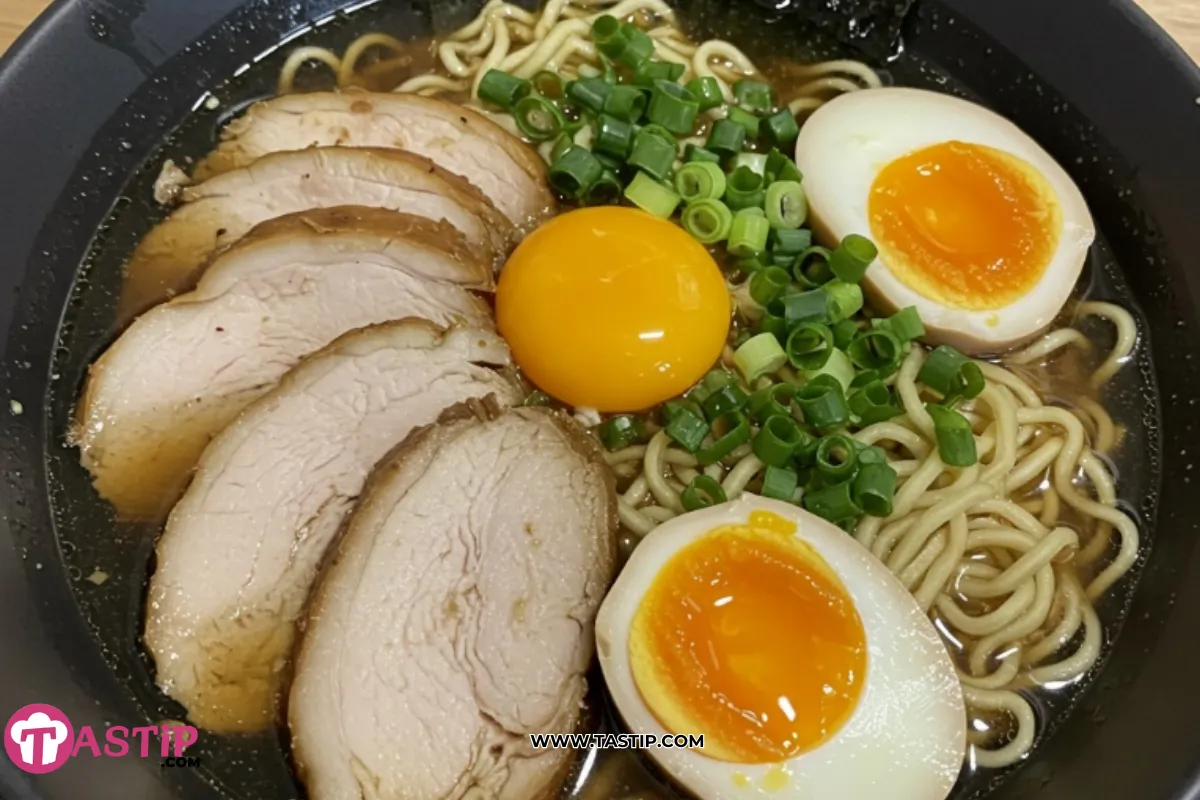
You’ve been lied to. That sad, salty brick of noodles from your college days is a distant, depressing memory. We’re not here to talk about survival food.
We’re here to talk about an experience. This isn’t just a recipe; it’s a masterclass in flavor engineering.
Imagine a broth so rich and complex it makes restaurant ramen taste like dishwater. Picture tender chicken and a perfectly runny egg, all clinging to springy, handmade-style noodles.
This is the bowl that will ruin all other ramen for you. Permanently.
Why settle for mediocrity when greatness is less than an hour away? Your taste buds are begging for an upgrade.
It’s time to answer the call.
What Makes This Recipe So Good
This recipe works because it focuses on layering flavors at every single step. We’re not just dumping ingredients into a pot of water. We’re building a foundation of umami that hits you in waves.
The secret weapon? Chicken fat. We render it from the skin to cook our aromatics, infusing the entire dish with a deep, savory base.
This is flavor alchemy, and it’s shockingly simple. The broth gets its body from a quick simmer, creating a luxurious texture without needing to boil bones for 12 hours.
Finally, we treat the toppings not as an afterthought, but as the main event. The marinated egg and seasoned chicken are stars in their own right.
Every component has a purpose, creating a symphony in a bowl instead of a cacophony of random ingredients.
The Ingredients (No Mysterious Pantry Items)
Gather these simple, high-impact ingredients. Quality matters here, especially with a few key items.
- For the Broth & Noodles: 4 cups good-quality chicken broth, 2 packages of fresh or high-quality dried ramen noodles (throw away the flavor packets!), 1 tbsp soy sauce, 1 tbsp mirin.
- For the Aromatics & Tare (Seasoning Base): 2 boneless, skin-on chicken thighs, 3 cloves garlic (minced), 1-inch piece of ginger (grated), 2 tbsp sesame oil, 1 tbsp gochujang (optional, for spice).
- For the Toppings: 2 soft-boiled eggs, 2 green onions (sliced), 1 sheet nori (seaweed), sliced bamboo shoots (canned is fine).
Step-by-Step Instructions: Your Path to Ramen Glory
Follow these steps precisely. This isn’t the time for creative interpretation.
We’re building a flavor skyscraper, and you don’t want to skip a floor.
- Render the Chicken Fat: Pat the chicken thighs dry. Place them skin-side down in a cold, dry pot. Turn the heat to medium and cook until the skin is golden brown and crispy and the fat has rendered out, about 8-10 minutes.
Remove the chicken and set aside.
- Sauté the Aromatics: In the beautiful chicken fat now in your pot, add the garlic and ginger. Sauté for 60 seconds until incredibly fragrant. Don’t burn it, or you’ll have to start over.
I’m not kidding.
- Build the Broth: Pour in the chicken broth, soy sauce, and mirin. Add the seared chicken thighs back to the pot. Bring to a simmer and let it cook for 20 minutes to infuse all the flavors.
- Cook the Noodles: While the broth simmers, cook your noodles separately according to package directions.
Drain immediately. Why separately? So they don’t turn your beautiful broth into a starchy, cloudy mess.
- Prepare the Toppings: Slice your green onions, soft-boil your eggs (6.5 minutes in boiling water for runny perfection), and slice the chicken thighs.
- Assemble the Masterpiece: Divide the noodles between two bowls.
Ladle the hot broth over them. Artfully arrange the sliced chicken, halved soft-boiled egg, green onions, nori, and bamboo shoots. Take a picture.You’ve earned it.
Storage Instructions
Let’s be real, you’ll probably eat it all. But if you have willpower of steel, here’s how to handle leftovers.
Store the broth and toppings separately from the noodles. The broth will keep in an airtight container in the fridge for 3-4 days. The noodles will become a sad, mushy disaster if stored in the broth.
FYI, you can freeze the broth for up to 3 months.
When ready to eat, reheat the broth on the stove, cook a fresh portion of noodles, and assemble. It’s almost as good as new. Almost.
The Benefits of This Recipe (Besides It Being Delicious)
This recipe is a powerhouse of practical benefits.
First, it’s incredibly cost-effective. A single bowl at a ramen shop can cost $15. This entire recipe costs a fraction of that.
Second, you have complete control over the ingredients. No MSG? No problem.
Want it spicier? Add more gochujang. You’re the boss.
It’s also surprisingly fast for a from-scratch meal that tastes like it took all day.
Finally, it’s impressive. This is a “wow” dish you can serve to guests that makes you look like a culinary genius. The ROI on this skill is massive.
Common Mistakes to Avoid (Don’t Be This Person)
I’ve seen the tragedies.
Avoid these pitfalls at all costs.
- Using the Flavor Packet: This is an immediate disqualification. We are building real flavor. Throw that sodium bomb away.
- Cooking Noodles in the Broth: This is the number one amateur mistake.
It makes the broth cloudy and the noodles overcooked. Just don’t.
- Overcooking the Egg: A hard-boiled egg in ramen is a crime. Aim for a jammy, runny yolk.
It’s a non-negotiable textural element.
- Skipping the Fat Rendering: This step is what separates good ramen from great ramen. The chicken fat is liquid gold. Do not substitute plain oil.
Alternatives and Swaps
Don’t have an ingredient?
Don’t panic. Here are some solid swaps.
- No Chicken Thighs? Use breast, but sear it well. The broth will be less rich, IMO, but still good.
- Vegetarian? Use vegetable broth.
Sauté mushrooms in oil until browned to build umami instead of the chicken. Top with tofu.
- No Mirin? A tiny pinch of sugar mixed with a little extra broth or water is a decent stand-in.
- Different Protein? Thinly sliced pork belly or shrimp work beautifully. Cook them separately and add at the end.
Frequently Asked Questions
Can I make this recipe vegetarian?
Absolutely.
Swap the chicken broth for a robust vegetable broth. Instead of rendering chicken fat, sauté a combination of shiitake mushrooms and a tablespoon of white miso paste in sesame oil to create that deep umami base. Top with tofu, corn, or extra veggies.
My broth tastes a bit bland.
What can I do?
This usually means it needs more salt or umami. Add a bit more soy sauce, teaspoon by teaspoon. A small spoonful of white or red miso paste dissolved in a ladle of hot broth then stirred back in will work wonders.
A dash of fish sauce (even if it’s not traditional) is a chef’s secret for depth.
How do I get the perfect soft-boiled egg?
Bring a pot of water to a rolling boil. Gently lower room-temperature eggs into the water using a spoon. Set a timer for 6 minutes and 30 seconds for a runny yolk.
Immediately transfer the eggs to an ice bath to stop the cooking. Peel carefully.
What’s the best type of noodle to use?
Fresh or frozen “ramen-style” noodles are the gold standard. If you can’t find those, look for dried “wavy” noodles or even fresh alkaline noodles like those used in lo mein.
The key is a chewy, springy texture. Avoid instant ramen noodles for this—they’re too thin and fragile.
Final Thoughts
This isn’t just a meal. It’s a statement.
It proves that incredible food doesn’t require fancy equipment or a culinary degree. It requires intention, a few good ingredients, and the courage to throw away that damn flavor packet.
You now possess the blueprint for a dish that will consistently deliver satisfaction. So, what are you waiting for?
Your ultimate chicken ramen is calling. Go answer it.
PrintUltimate Chicken Ramen Noodles
- Total Time: 40 minutes
- Yield: 2 servings 1x
Description
Ultimate Chicken Ramen Noodles deliver restaurant-quality flavor at home. Tender chicken, a rich, umami-packed broth, springy noodles, and perfectly soft-boiled eggs come together in a bowl that’s impressive yet approachable. Fast, flavorful, and customizable for any taste preference.
Ingredients
4 cups chicken broth
2 packages fresh or high-quality dried ramen noodles
1 tbsp soy sauce
1 tbsp mirin
2 boneless, skin-on chicken thighs
3 cloves garlic, minced
1-inch piece ginger, grated
2 tbsp sesame oil
1 tbsp gochujang (optional)
2 soft-boiled eggs
2 green onions, sliced
1 sheet nori
Sliced bamboo shoots (canned)
Instructions
1. Pat chicken thighs dry and place skin-side down in a cold, dry pot. Cook over medium heat 8-10 minutes until skin is golden and fat is rendered. Remove chicken and set aside.
2. Add garlic and ginger to the rendered chicken fat. Sauté 60 seconds until fragrant.
3. Pour in chicken broth, soy sauce, and mirin. Return chicken thighs to the pot and simmer 20 minutes.
4. Cook noodles separately according to package directions and drain immediately.
5. Slice chicken and prepare toppings: soft-boil eggs, slice green onions, nori, and bamboo shoots.
6. Divide noodles into bowls. Ladle hot broth over noodles and top with sliced chicken, eggs, green onions, nori, and bamboo shoots.
Notes
Do not use instant flavor packets; they make the broth salty and one-dimensional.
Cook noodles separately to avoid cloudy broth.
Aim for runny yolks in eggs for authentic texture.
Rendering chicken fat is essential for deep, rich flavor.
Vegetarian option: use vegetable broth and sauté mushrooms for umami.
- Prep Time: 10 minutes
- Cook Time: 30 minutes
- Category: Dinner
- Method: Simmer
- Cuisine: Japanese
Nutrition
- Serving Size: 1 bowl
- Calories: 550
- Sugar: 3 g
- Sodium: 1250 mg
- Fat: 28 g
- Saturated Fat: 7 g
- Unsaturated Fat: 18 g
- Trans Fat: 0 g
- Carbohydrates: 45 g
- Fiber: 2 g
- Protein: 35 g
- Cholesterol: 160 mg