
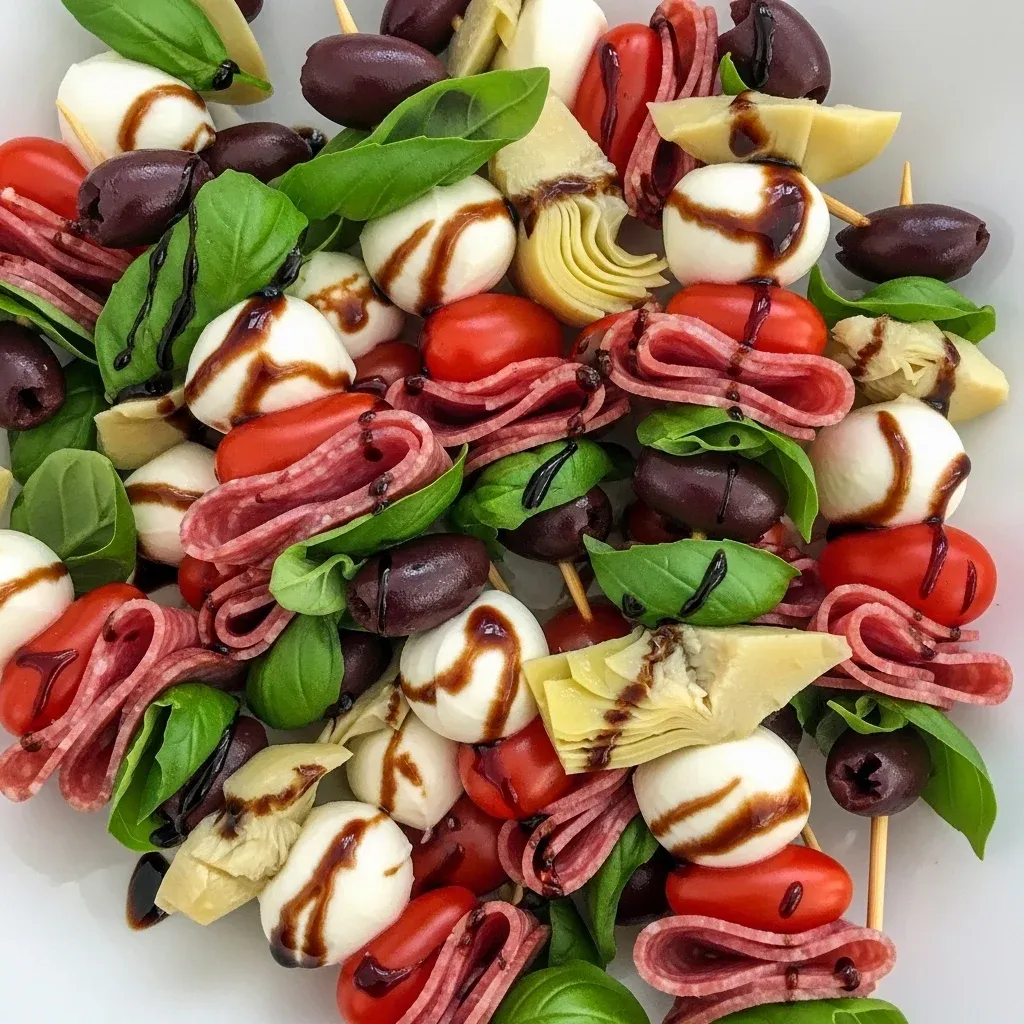
These Antipasto Skewers with Balsamic Glaze provide the ultimate balance of flavor and texture in a single bite. You get the creamy richness of fresh mozzarella, the salty punch of cured meats, and the bright acidity of marinated vegetables. As a former test kitchen chef, I focus on the structural integrity and flavor layering of every component.
This appetizer highlights how simple ingredients can transform when you understand their chemical properties. You will love how the sweet, viscous glaze ties every element together. Let’s dive into why these Antipasto Skewers with Balsamic Glaze are a masterclass in culinary balance. This recipe requires no cooking, making it an efficient choice for any gathering where quality matters.
Why You’ll Love This Recipe
- Perfect Flavor Equilibrium: This recipe hits every part of the palate by combining salt, fat, acid, and sugar in a mathematically satisfying way.
- Textural Contrast: You experience the snap of a tomato, the chew of a tortellini, and the buttery softness of mozzarella in one sequence.
- Low Effort, High Impact: You can assemble these Antipasto Skewers with Balsamic Glaze in minutes, yet they offer a professional, gourmet aesthetic.
- Nutrient-Dense Ingredients: By utilizing fermented olives, protein-rich cheese, and lycopene-heavy tomatoes, you provide a snack that supports satiety and health.
Ingredients You’ll Need
Success in the kitchen starts with ingredient selection. For these Antipasto Skewers with Balsamic Glaze, choose high-moisture mozzarella and high-quality cured meats to ensure the best mouthfeel. The science of a great skewer relies on the moisture content of the individual components.
If your ingredients are too dry, the palate feels fatigued; if they are too wet, the glaze won’t adhere properly. Here is what you need:
| Ingredient | Quantity | Chef’s Note |
| Ciliegine Mozzarella Balls | 8 oz | Choose “cherry-sized” for the best surface-to-volume ratio. |
| Genoa Salami | 4 oz | Thinly sliced for easy folding and optimal fat release. |
| Grape Tomatoes | 1 pint | Look for firm skins that will resist piercing without bursting. |
| Marinated Artichoke Hearts | 6 oz | Canned in water or oil works, but oil-marinated adds more depth. |
| Pitted Kalamata Olives | 1/2 cup | The fermentation process in Kalamatas provides a necessary umami kick. |
| Fresh Basil Leaves | 1 bunch | Large leaves provide a fragrant barrier between the meat and cheese. |
| Balsamic Glaze | 1/4 cup | A high-viscosity glaze ensures it clings to the skewers. |
| Cheese Tortellini (Optional) | 1 cup | Cooked al dente to provide a starchy structural anchor. |
Substitutions & Variations
Understanding substitutions allows you to tailor the Antipasto Skewers with Balsamic Glaze to various dietary needs without sacrificing the culinary integrity of the dish. If you want a leaner profile, swap the traditional salami for smoked turkey breast or a high-quality bresaola. For a vegetarian version, simply omit the meat and add a secondary marinated vegetable, such as roasted red peppers or pickled mushrooms.
If you are monitoring sodium, rinse your olives and artichokes thoroughly under cold water to remove excess brine. For a dairy-free alternative, use marinated tofu cubes seasoned with nutritional yeast and lemon juice to mimic the savory profile of the mozzarella. Always remember that the goal is to maintain the “salt-fat-acid” triangle that makes Antipasto Skewers with Balsamic Glaze so addictive.
Understanding substitutions allows you to tailor the Antipasto Skewers with Balsamic Glaze to various dietary needs without sacrificing flavor. For more creative ideas, check out 15 Scary Snacks for Halloween Parties.
Step-by-Step Instructions
- Prepare the Components: Wash the grape tomatoes and pat them completely dry. Moisture on the surface of the vegetables will prevent the balsamic glaze from sticking. If you are using tortellini, boil them in salted water until just tender, drain, and toss with a teaspoon of olive oil to prevent sticking.
- Fold the Meat: Take a slice of salami and fold it into quarters. This creates “pockets” that catch the glaze and add a ruffled visual texture to your Antipasto Skewers with Balsamic Glaze.
- The Assembly Sequence: Slide a tomato onto a 4-inch wooden skewer. Follow with a folded basil leaf, a mozzarella ball, a slice of folded salami, an artichoke heart, and finally an olive. This specific order ensures that the colors are vibrant and the textures alternate logically.
- Arrange for Service: Place the assembled skewers on a large platter. Ensure they are not overlapping too much, as this makes it difficult for guests to grab them without disturbing the arrangement.
- Apply the Glaze: Just before serving, drizzle the Antipasto Skewers with Balsamic Glaze in a zig-zag motion. From a physics perspective, a higher drop height creates thinner, more uniform lines of glaze across the ingredients.
- Final Seasoning: Finish with a light dusting of freshly cracked black pepper. The piperine in the pepper acts as a flavor enhancer for the sweet balsamic notes.
Pro Tips for Success
As a chef, I can tell you that the difference between a good appetizer and a great one lies in the details. When making Antipasto Skewers with Balsamic Glaze, pay attention to the temperature. Serving these slightly below room temperature (around 60°F) allows the fats in the cheese and meat to soften just enough to release their full aromatic profile. If they are ice-cold, the flavors will remain “muted.”
Another technical tip involves the balsamic glaze itself. If you are making your own glaze by reducing balsamic vinegar, ensure you stop when the liquid coats the back of a spoon. This is known as the “nappe” stage.
Over-reducing will lead to a sticky, candy-like texture that is difficult to eat. Furthermore, consider the “capillary action” of your ingredients. Smooth surfaces like tomatoes will cause the glaze to bead up, whereas the crevices of the artichokes and the folds of the salami will hold the glaze beautifully. This is why the folding technique for the meat is so vital for the overall flavor delivery of your Antipasto Skewers with Balsamic Glaze.
Finally, always use high-quality skewers. Bamboo is generally superior to plastic because the slight friction of the wood helps keep the ingredients in place. If the ingredients slide around too much, the presentation fails. Consistency is king in a test kitchen, so try to cut your vegetables to a uniform size to match the diameter of the mozzarella balls.
Serving the Antipasto Skewers with Balsamic Glaze at the right temperature can elevate the flavors. To enhance your culinary skills further, consider refreshing your palate with Strawberry Lemon Detox Water.
Storage & Reheating Tips
The Antipasto Skewers with Balsamic Glaze are best enjoyed fresh, but you can certainly prepare parts of them in advance. You can assemble the skewers up to 24 hours ahead of time, provided you store them in an airtight container in the refrigerator.
However, do not apply the balsamic glaze until the very last moment. The acid in the glaze will eventually begin to break down the proteins in the cheese and cause the vegetables to soften and “weep” liquid through osmosis.
If you have leftovers, do not freeze them. The high water content in the tomatoes and mozzarella will expand during freezing, rupturing the cell walls and leaving you with a mushy mess upon thawing.
Instead, if you have leftover Antipasto Skewers with Balsamic Glaze, you can slide the ingredients off the sticks and toss them into a bowl with some fresh arugula for a quick and easy pasta salad or grain bowl. There is no need for reheating, as these components are designed to be consumed cold or at room temperature.
What to Serve With This Recipe
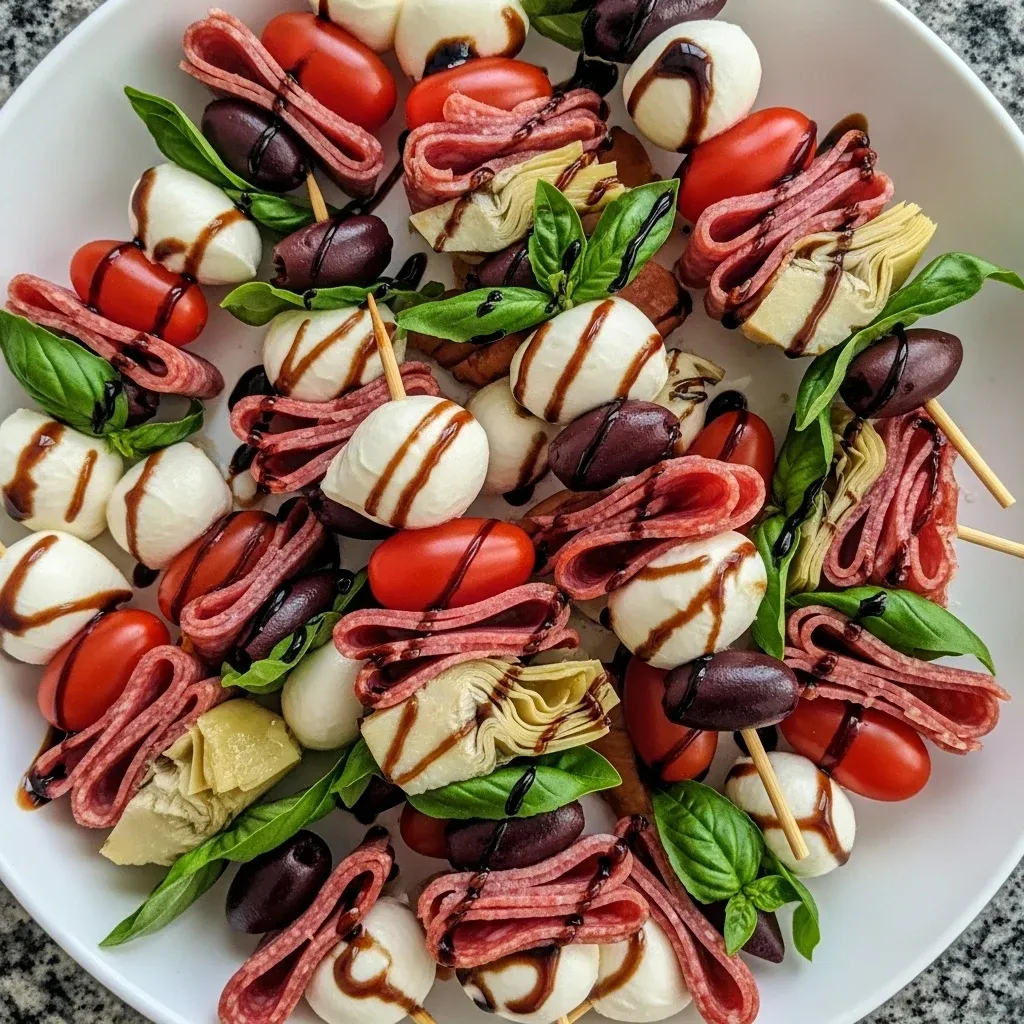
When planning your menu around Antipasto Skewers with Balsamic Glaze, think about complementary flavors and textures. Since these skewers are rich and savory, you should pair them with lighter, refreshing options. A crisp green salad with a simple lemon vinaigrette works perfectly to cleanse the palate between bites of cured meat and cheese. Roasted vegetables, such as asparagus or bell peppers, also make an excellent side dish, providing a warm contrast to the cold skewers.
If you are hosting a larger party, consider serving these alongside a platter of crusty sourdough bread or whole-grain crackers. The starches provide a neutral base that balances the intense acidity of the balsamic.
For drinks, a sparkling mineral water with a twist of lime or a dry white wine like a Pinot Grigio will cut through the fat of the mozzarella and salami beautifully. These Antipasto Skewers with Balsamic Glaze are versatile enough to serve as a standalone snack or as part of a multi-course Mediterranean-themed dinner.
Pairing these Antipasto Skewers with Balsamic Glaze with lighter dishes will create a well-rounded meal. For a delicious side that complements these flavors, try Crockpot Cheesy Ranch Beef Pasta Shells.
FAQs
Can I make these Antipasto Skewers with Balsamic Glaze vegan?
Yes, you certainly can. To make a vegan version, replace the mozzarella with a cashew-based cheese or extra-firm tofu that has been marinated in lemon juice and salt. Replace the salami with sun-dried tomatoes or marinated mushrooms to maintain that savory, umami-rich profile. Most commercial balsamic glazes are already vegan, but always check the label for honey or stabilizers.
How do I keep the basil from wilting on the skewers?
Basil is highly sensitive to temperature and oxidation. To keep it fresh on your Antipasto Skewers with Balsamic Glaze, wait to pluck the leaves from the stem until right before you assemble. Ensure the leaves are completely dry after washing. If you are making these in advance, place a slightly damp paper towel over the skewers in their container to maintain a humid environment without soaking the leaves.
Why is my balsamic glaze too runny?
If the glaze is running off your Antipasto Skewers with Balsamic Glaze, it likely hasn’t been reduced enough or it was applied to wet ingredients. For a store-bought glaze, try chilling it in the refrigerator for 30 minutes before drizzling; the cold will increase its viscosity.
If you are making it at home, remember that the glaze will thicken significantly as it cools. Always dry your tomatoes and mozzarella with a paper towel before assembly to provide a dry surface for the glaze to grip.
Antipasto skewers are a popular appetizer that combines various cured meats, cheeses, and vegetables. These bites highlight Italian culinary traditions and the importance of balance in flavors and textures, as detailed in the Antipasto article.
Nutrition Information (per serving)
This data represents approximately two Antipasto Skewers with Balsamic Glaze per serving. These values can vary based on the specific brands of meat and cheese you select.
| Metric | Amount |
| Calories | 145 kcal |
| Total Fat | 10g |
| Saturated Fat | 4.5g |
| Cholesterol | 25mg |
| Sodium | 380mg |
| Total Carbohydrates | 6g |
| Dietary Fiber | 1g |
| Sugars | 4g |
| Protein | 8g |
I hope you enjoy the scientific precision and culinary joy that these Antipasto Skewers with Balsamic Glaze bring to your kitchen. By focusing on ingredient quality and the physics of flavor, you transform a simple appetizer into a professional-grade experience. Happy cooking!
Print
Antipasto Skewers with Balsamic Glaze
- Total Time: 20 mins
- Yield: 4 servings 1x
- Diet: Gluten Free
Description
These Antipasto Skewers with Balsamic Glaze provide the ultimate balance of flavor and texture in a single bite, combining creamy mozzarella, salty cured meats, and bright marinated vegetables, finished with a sweet, viscous balsamic glaze.
Ingredients
8 oz Ciliegine Mozzarella Balls
4 oz Genoa Salami
1 pint Grape Tomatoes
6 oz Marinated Artichoke Hearts
1/2 cup Pitted Kalamata Olives
1 bunch Fresh Basil Leaves
1/4 cup Balsamic Glaze
1 cup Cheese Tortellini (Optional)
Instructions
- Prepare the Components: Wash the grape tomatoes and pat them completely dry. If using tortellini, boil them in salted water until just tender, drain, and toss with a teaspoon of olive oil
- Fold the Meat: Take a slice of salami and fold it into quarters
- The Assembly Sequence: Slide a tomato onto a skewer, followed by a folded basil leaf, mozzarella ball, a slice of folded salami, an artichoke heart, and finally an olive
- Arrange for Service: Place assembled skewers on a platter without overlapping
- Apply the Glaze: Drizzle the skewers with balsamic glaze before serving
- Final Seasoning: Finish with a light dusting of freshly cracked black pepper
Notes
Serve slightly below room temperature for optimal flavor.
Do not apply glaze until right before serving to maintain texture.
- Prep Time: 20 mins
- Cook Time: 0 mins
- Category: Appetizer
- Method: Assembling
- Cuisine: Italian
Nutrition
- Serving Size: 2 skewers
- Calories: 145 kcal
- Sugar: 4g
- Sodium: 380mg
- Fat: 10g
- Saturated Fat: 4.5g
- Unsaturated Fat: 5.5g
- Trans Fat: 0g
- Carbohydrates: 6g
- Fiber: 1g
- Protein: 8g
- Cholesterol: 25mg